
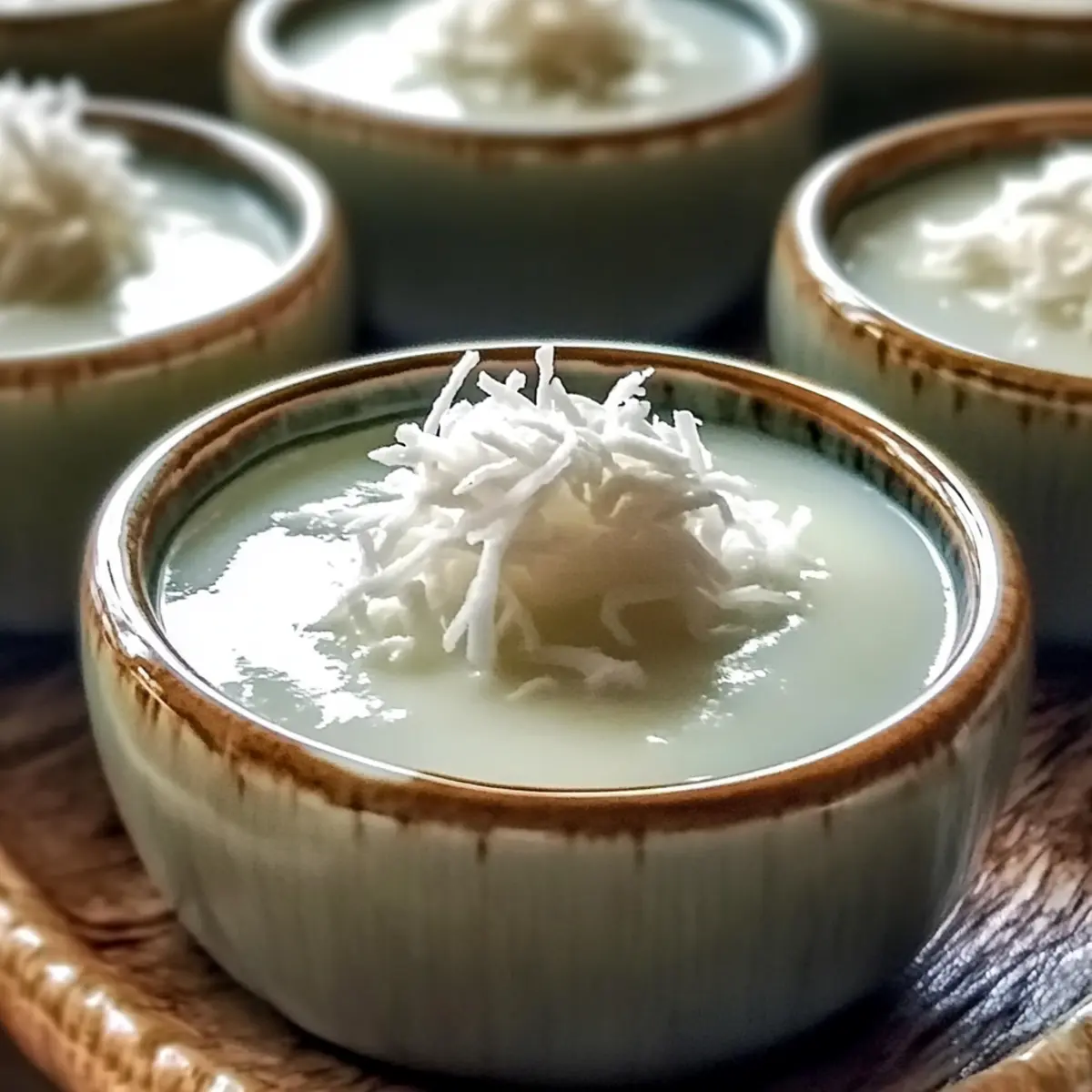
As the delicate steam curls around the kitchen, a sweet anticipation fills the air, heralding the arrival of my Thai Coconut Custard, or Khanom Thuai. This luscious treat boasts a creamy base kissed with pandan essence and is crowned with smooth, salty coconut cream—an irresistible duo that dances on your palate. What’s truly delightful about this recipe is its incredible versatility; whether you’re crafting a simple indulgence for a cozy night or impressing guests at a celebration, it fits perfectly into both scenarios. Plus, it’s gluten-free and vegan, ensuring everyone can join in on the enjoyment. Are you ready to discover the secrets behind this enchanting dessert? Let’s dive into the world of Thai Coconut Custard together!
Why is Thai Coconut Custard So Special?
Unique, Flavorful Experience: The Thai Coconut Custard captures the essence of Southeast Asia with its fragrant pandan and creamy coconut layers.
Allergy-Friendly: This dessert is both gluten-free and vegan, making it accessible for various diets without sacrificing flavor.
Easy Preparation: Whip this stunning treat together using simple techniques—perfect for both novice and experienced cooks alike.
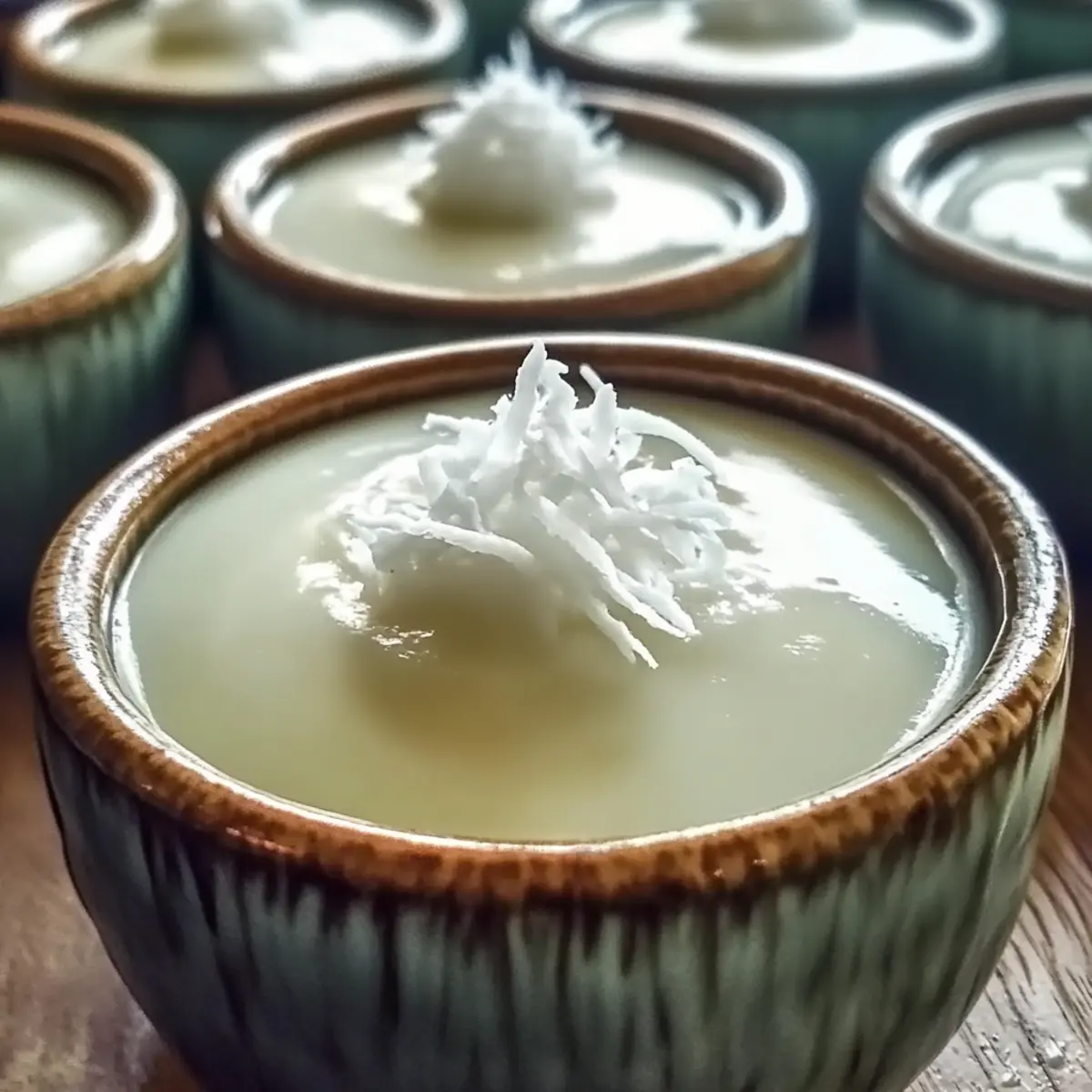
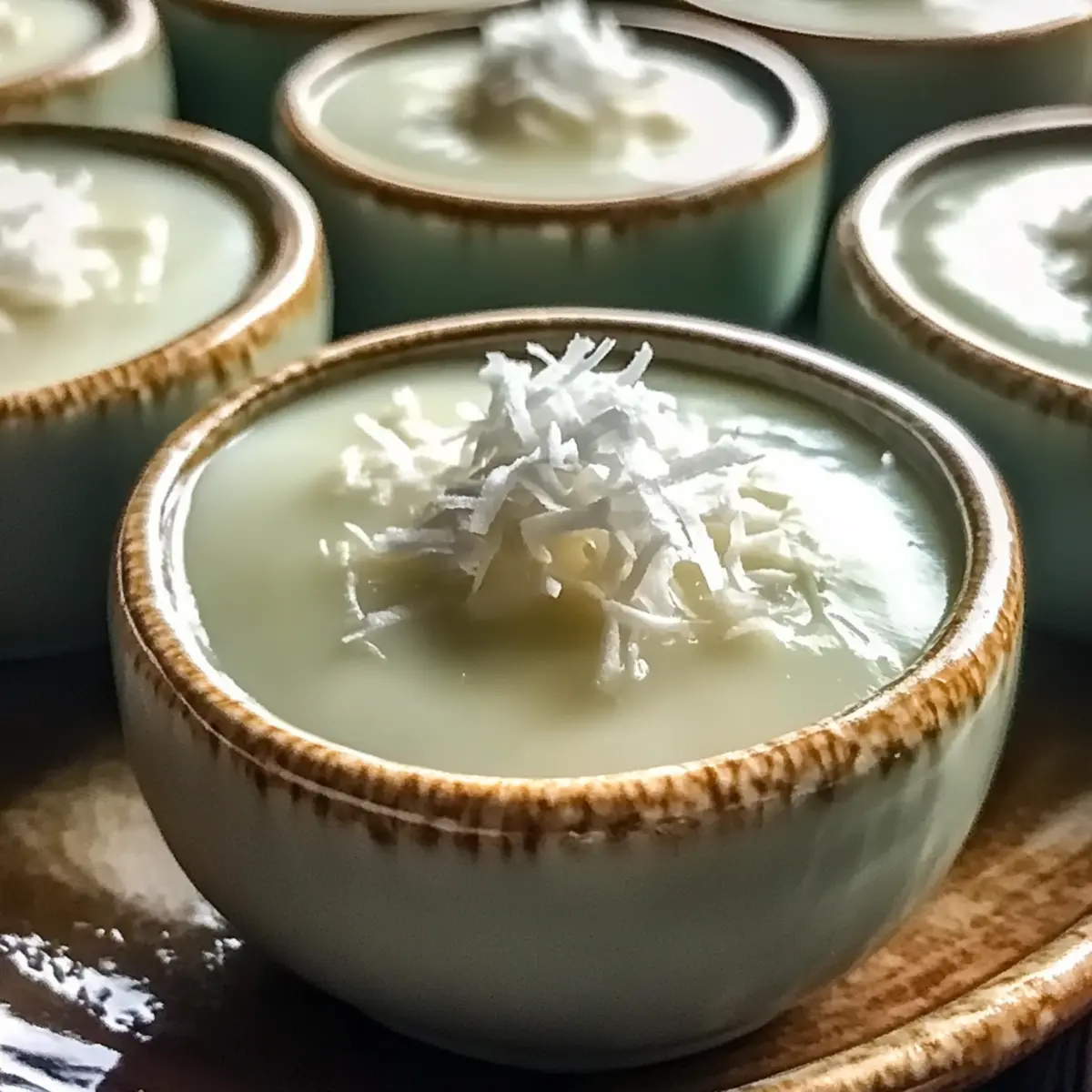
Versatile Serving Options: Enjoy it warm or chilled, topped with fresh mango or shredded coconut for a delightful twist.
Crowd-Pleasing Delight: Impress your friends and family with this visually stunning dessert, promising to be the star of any gathering.
Whether you’re indulging in a quiet evening at home or looking for an eye-catching dessert for a celebration, Coconut Chicken Rice pairs beautifully as a main dish!
Thai Coconut Custard Ingredients
• All you need to create this delightful dessert!
For the Custard Base
- Rice Flour – Adds structure; all-purpose flour can be used, but texture may differ.
- Tapioca Flour – Essential for that chewy texture; no substitutes recommended.
- Pandan Juice – Infuses a unique flavor and vibrant color; diluted pandan extract is a possible substitute.
- Palm Sugar/Brown Sugar – Provides sweetness with a lovely caramel note; coconut sugar works well too.
- Salt – Balances flavors; sea salt brings out a delicious contrast.
For the Coconut Cream Topping
- Coconut Cream – Creates the rich topping; can be swapped with coconut milk, but richness may vary.
- Additional Rice Flour – Thickens the topping; necessary for the desired consistency.
- Salt – A pinch enhances the overall flavor of the topping.
This Thai Coconut Custard recipe is simple yet satisfying, inviting you to relish every creamy bite!
Step‑by‑Step Instructions for Thai Coconut Custard
Step 1: Prepare Cups
Begin by lightly greasing 12 small ceramic cups or mini muffin pans using coconut oil or a neutral cooking spray. This prevents the Thai Coconut Custard from sticking and ensures easy release after cooking. Set the prepared cups aside while you mix the custard base—this will make the process seamless when you’re ready to fill them.
Step 2: Mix Bottom Layer
In a large mixing bowl, whisk together rice flour, tapioca flour, pandan juice, palm sugar, and salt until smooth and free of lumps. Ensure the mixture has a vibrant green color from the pandan juice, which not only adds flavor but a beautiful hue. This step is crucial as it forms the delightful base for the Thai Coconut Custard.
Step 3: Steam Bottom Layer
Fill each greased cup halfway with the custard mixture, making sure not to overfill. Place them in a steamer over boiling water and cover tightly. Steam for 5-6 minutes, or until the layers feel lightly firm but still jiggle slightly when tapped. This initial steaming sets the base layer of your Thai Coconut Custard perfectly.
Step 4: Combine Top Layer
While the bottom layer is steaming, prepare the luscious coconut cream topping. In a separate bowl, whisk together the coconut cream, additional rice flour, and a pinch of salt until creamy and well combined. The mixture should be smooth and slightly thicker, creating a perfect complement to the bottom layer of the Thai Coconut Custard.
Step 5: Add Top Layer
Once the bottom layer is set, carefully pour the coconut cream mixture over each cup. Fill them gently to ensure that the layers don’t mix. Again, place the cups back in the steamer and cover. Steam for an additional 5-7 minutes, until the coconut layer is fully set and has a glossy appearance, indicating that your Thai Coconut Custard is nearly ready.
Step 6: Cool and Serve
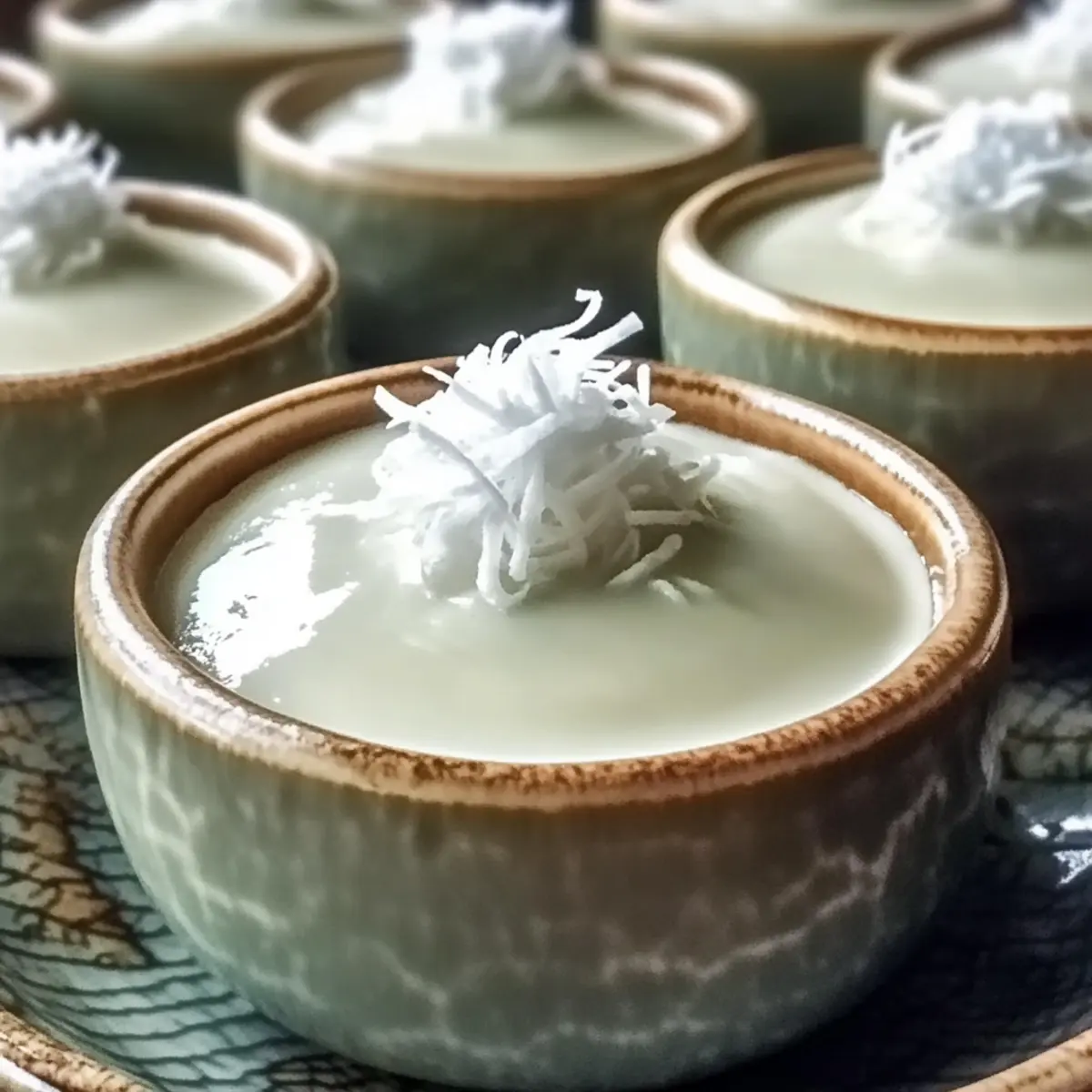
After steaming, remove the cups from the steamer and allow them to cool slightly at room temperature. Once cooled, you can serve your Thai Coconut Custard warm for a delightful treat, or chill them in the refrigerator if you prefer a refreshing dessert. Enjoy the beautiful contrast of creamy layers as you savor each bite!
Make Ahead Options
These Thai Coconut Custards are perfect for busy home cooks looking to save time! You can prepare the bottom layer up to 24 hours in advance, whisking together the rice flour, tapioca flour, pandan juice, palm sugar, and salt, then steaming as directed. Simply store the steamed bases in the refrigerator, covered with plastic wrap to prevent drying out. When you’re ready to enjoy this delightful dessert, mix the coconut cream topping and pour it over the set bottom layer, followed by a quick steam for an additional 5-7 minutes until fully set. This way, you’ll have creamy, flavorful Thai Coconut Custard ready with minimal last-minute effort—just as delicious and impressive for your family or guests!
How to Store and Freeze Thai Coconut Custard
Fridge: Store leftover Thai Coconut Custard in an airtight container in the refrigerator for up to 2 days. This will help preserve its creamy texture and delightful flavor.
Freezer: For longer storage, freeze the custard in airtight containers or freeze-safe bags for up to 1 month. Label them with the date for easy identification.
Thawing: To enjoy frozen Thai Coconut Custard, thaw overnight in the refrigerator. Reheat gently in the steamer for 10-15 minutes to regain its luscious creaminess.
Make-Ahead Tip: You can prepare the bottom layer of the custard up to 24 hours in advance. Just refrigerate it until you’re ready to steam the coconut cream topping for a fresh dessert experience!
Expert Tips for Thai Coconut Custard
• Use Fresh Pandan: Fresh pandan leaves yield the best flavor; avoid dried or powdered options for an authentic taste.
• Steaming Technique: Ensure the water in the steamer doesn’t touch the custard cups to maintain a gentle steam and prevent sogginess.
• Check for Doneness: For the bottom layer, aim for a slight jiggle when tapped; this indicates it’s set but still retains a creamy texture.
• Storage Tips: Store any leftover Thai Coconut Custard in the refrigerator, covered, for up to 2 days to preserve its creaminess.
• Adjust Sweetness: Feel free to experiment with sweeteners; use maple syrup or agave for a different flavor profile or to accommodate dietary preferences.
Thai Coconut Custard Variations & Substitutions
Feel free to personalize this delightful dessert to suit your tastes and dietary preferences!
- Gluten-Free: Use glutinous rice flour instead of regular flour for an even chewier texture, making each bite more satisfying.
- Vegan Sweeteners: Instead of palm or brown sugar, try maple syrup for a different level of sweetness that still keeps it vegan—it adds a lovely depth of flavor!
- Fruit Toppings: Garnish the custard with fresh mango slices or ripe berries for a colorful and fruit-filled twist that enhances the overall experience.
- Chocolate Drizzle: For a decadently sweet surprise, drizzle some melted dark chocolate over the cooled custard, creating a beautiful contrast in flavors.
- Chill for Refreshment: Consider serving the custard chilled on a warm day as a refreshing dessert. It transforms into a light and creamy treat that’s simply irresistible!
- Nutty Crunch: Top with shredded toasted coconut or crushed nuts for added texture and flavor; this can elevate the custard’s taste profile wonderfully.
- Mix-In Pandan Extract: If fresh pandan isn’t available, feel free to use diluted pandan extract for a similar flavor experience, ensuring you still capture that delightful essence.
- Serve with Sticky Rice: Pair with a scoop of sweet coconut sticky rice for a traditional Thai experience that beautifully complements this custard; it’s a match made in heaven!
Don’t forget to check out the perfect meal pairing with your Thai Coconut Custard—imagine it alongside a delicious plate of Coconut Chicken Rice for an unforgettable feast!
What to Serve with Delightful Thai Coconut Custard?
Indulge in a journey of flavors that perfectly complement the sweetness and creaminess of this enchanting dessert.
-
Fresh Mango Slices: The tropical sweetness of ripe mango adds a fresh burst that balances the creamy custard perfectly.
-
Toasted Coconut Flakes: Sprinkle some on top for extra texture and a nutty crunch that enhances the coconut flavor of the custard.
-
Coconut Sticky Rice: Serve alongside this traditional favorite for a delightful contrast in textures; the sticky rice complements the custard’s creaminess beautifully.
-
Tropical Fruit Salad: A medley of pineapple, kiwi, and berries brings a refreshing zest, making each bite a vibrant experience.
-
Chai Tea: The warm spices of chai offer a comforting beverage pairing, accentuating the custard’s unique flavors while calming the palate.
-
Lychee Sorbet: The light and floral notes of lychee sorbet create an elegant touch, refreshing the taste buds after each luscious spoonful of custard.
-
Mint Leaves: Garnish with fresh mint for a pop of color and a hint of coolness, elevating the overall presentation and flavor of your dessert.
-
Almond Biscotti: The crunchiness of almond biscotti provides a delightful contrast that complements the soft, creamy texture of the custard.
Each of these pairings brings its own delightful twist, making for a memorable dessert experience that celebrates the charm of Thai Coconut Custard!
Thai Coconut Custard Recipe FAQs
How do I choose the right pandan juice?
Absolutely! For the best flavor, I recommend using fresh pandan juice extracted from vibrant green pandan leaves. You can achieve this by blending fresh leaves with a bit of water and straining the mixture. If fresh isn’t available, diluted pandan extract works as an acceptable substitute, though the flavor might be slightly less intense.
How should I store leftover Thai Coconut Custard?
Very! To keep your Thai Coconut Custard fresh, store it in an airtight container in the refrigerator for up to 2 days. This prevents the custard from drying out and helps maintain its delicious creamy texture. Before serving, gentle reheat if desired for that warm, comforting experience.
Can I freeze Thai Coconut Custard? If so, how?
Absolutely! To freeze your Thai Coconut Custard, allow it to cool completely before placing it in airtight containers or freezer-safe bags. Label them with the date for easy identification and freeze for up to 1 month. To thaw, simply move it to the fridge overnight and reheat in the steamer for about 10-15 minutes until creamy again.
What if my custard layers don’t set properly?
Oh no! If your custard layers are not setting as expected, it might be due to a couple of reasons. Ensure you’re using enough tapioca flour, as it’s key for the chewy texture. Also, check that you steam them at the right temperature—water should be boiling but not touching the custard cups to keep the steam gentle. If they’re too runny, try extending the steaming time by a few minutes while keeping an eye on them.
Is Thai Coconut Custard safe for people with dietary restrictions?
Yes! This Thai Coconut Custard is both gluten-free and vegan, making it a great dessert option for those avoiding gluten and animal products. Just double-check your sugar alternatives and ensure they are also suitable for your specific dietary needs. I often make this for gatherings, and it’s a hit with everyone—dietary restrictions and all!
Can I change the sweeteners in Thai Coconut Custard?
Very! Absolutely feel free to experiment with different sweeteners like maple syrup or agave nectar for a unique twist. Just remember that you might need to adjust the quantity since some sweeteners are sweeter than traditional palm or brown sugar. Enjoy the sweet journey as you find the balance that delights your taste buds!
Irresistibly Creamy Thai Coconut Custard You’ll Love
Ingredients
Equipment
Method
- Begin by lightly greasing 12 small ceramic cups or mini muffin pans using coconut oil or a neutral cooking spray.
- In a large mixing bowl, whisk together rice flour, tapioca flour, pandan juice, palm sugar, and salt until smooth and free of lumps.
- Fill each greased cup halfway with the custard mixture and steam for 5-6 minutes, or until lightly firm.
- In a separate bowl, whisk together the coconut cream, additional rice flour, and a pinch of salt until creamy and well combined.
- Carefully pour the coconut cream mixture over each steamed cup and steam for an additional 5-7 minutes.
- Remove the cups from the steamer and allow them to cool slightly before serving.
Leave a Reply