
As I stood by the stove, the vibrant green of freshly sautéed asparagus danced in the warm light, and the aroma of shrimp sizzling in olive oil filled the air. It struck me how a simple dish like Shrimp and Asparagus Pasta can transform a typical evening into something truly special. This Italian pasta recipe shines with its delightful combination of spring vegetables and delicate seafood, making it a light yet satisfying choice for any occasion, whether it’s a quick weeknight dinner or a festive gathering. Plus, it’s incredibly easy to whip up, allowing you to savor a gourmet experience without spending hours in the kitchen. Are you ready to dive into a bowl of creamy, fresh goodness that captures the essence of spring? Let’s get cooking!
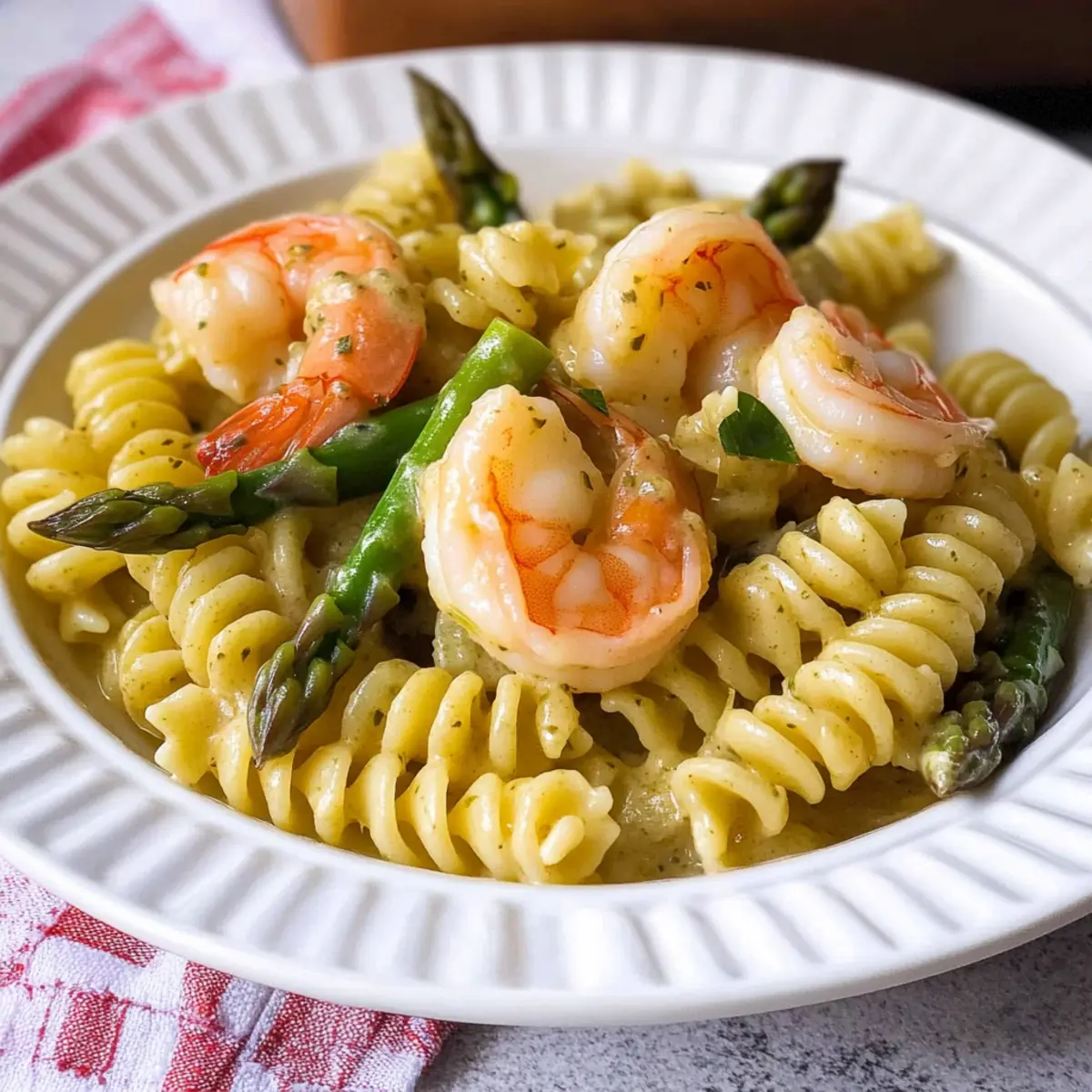
Why is this dish a must-try?
Freshness at Heart: This Shrimp and Asparagus Pasta bursts with vibrant flavors, capturing the essence of spring in every bite.
Easy to Make: With just a handful of ingredients, you’ll have a comforting dish on the table in no time, perfect for both busy weeknights and special celebrations.
Flavor Explosion: The combination of tender shrimp and earthy asparagus not only looks appealing but also creates a balanced flavor profile that will impress your guests.
Versatile: Feel free to customize with your favorite pasta shapes or add a sprinkle of red pepper flakes for a spicy kick! Discover more adaptations with Cajun Chicken Pasta or Creamy Garlic Shrimp Pasta.
Crowd-Pleasing: Whether you serve it for dinner or at a gathering, this dish is sure to excite everyone’s palate. Why settle for fast food when you can enjoy something homemade and delicious?
Shrimp & Asparagus Pasta Ingredients
Discover the essential ingredients for this delightful dish!
For the Pasta
- Fusilli – Provides texture and absorbs the creamy asparagus sauce. Substitution: Any pasta shape such as fettuccine or linguine can be used.
For the Vegetables
- Asparagus – Adds a fresh, earthy flavor and vibrant color. Note: Optional to use fresh peas or zucchini for variation.
For the Protein
- Shrimp – Main protein source, contributing a delicate seafood flavor. Prep Note: Peel and devein fresh shrimp before cooking.
For the Creamy Sauce
- Grated Parmigiano Reggiano – Adds creamy richness to the sauce. Substitution: Can use Parmigiano, Pecorino Romano, or nutritional yeast for a dairy-free option.
- Garlic – Offers aromatic flavor to the sauté. Note: A whole clove is ideal for infusing; remove before combining with pasta.
For Cooking
- Extra Virgin Olive Oil – Enhances flavor and is used for sautéing. Note: Essential for an authentic taste; avoid lower-quality oils.
- Salt – Enhances all the flavors in the dish. Use to taste, particularly in pasta water.
Step‑by‑Step Instructions for Shrimp & Asparagus Pasta
Step 1: Prepare Asparagus
Begin by trimming the woody ends of the asparagus and peeling the bottom half of the stalks. Bring a pot of water to a rolling boil and gently lower the asparagus, ensuring the tips stay above water. Blanch for approximately 8-10 minutes until they are bright green yet still slightly crisp. This step preserves their vibrant color and natural flavor.
Step 2: Blend Asparagus
Once the asparagus is cooked, carefully transfer it to a bowl of ice water to stop the cooking process. After cooling slightly, cut the stalks into smaller pieces and transfer them to a blender. Add grated Parmigiano Reggiano and blend until smooth and creamy. This will create a delicious, rich sauce that perfectly complements the Shrimp & Asparagus Pasta.
Step 3: Prep Shrimp
While the asparagus cools, turn your attention to the shrimp. Start by peeling and deveining the shrimp, then give them a good rinse under cold water. Pat them dry with a paper towel to remove excess moisture, which will help achieve that lovely sear when you cook them. Having the shrimp ready ensures a quick and efficient cooking process.
Step 4: Sauté Shrimp
Heat a generous splash of extra virgin olive oil in a large skillet over medium heat. Once the oil shimmers, add a whole garlic clove to infuse its flavor. After a minute, add the shrimp in a single layer and sauté for about 2-3 minutes. Just as they turn pink and opaque, remove the garlic clove to avoid bitterness. Your shrimp will beautifully contrast with the fresh flavors.
Step 5: Cook Pasta
In a separate pot, bring salted water to a boil and cook the fusilli according to package directions until it reaches an al dente texture, usually around 8-10 minutes. Stir occasionally to prevent sticking. Once done, reserve a cup of the pasta water before draining the rest, as the starchy water will help combine everything wonderfully.
Step 6: Combine
With the shrimp sautéed and the pasta ready, return the skillet to low heat. Add the drained fusilli and reserved asparagus tips to the skillet, mixing them with the creamy asparagus sauce. Pour in a splash of pasta water along with a drizzle of olive oil to coat everything evenly. Toss gently, allowing the flavors to meld beautifully together.
Step 7: Serve Immediately
Serve the Shrimp & Asparagus Pasta right away for the best texture and flavor. If desired, garnish with any reserved shrimp and asparagus tips for a lovely presentation. The creaminess of the sauce should cling to each piece of pasta, offering a delightful bite that captures the essence of spring.
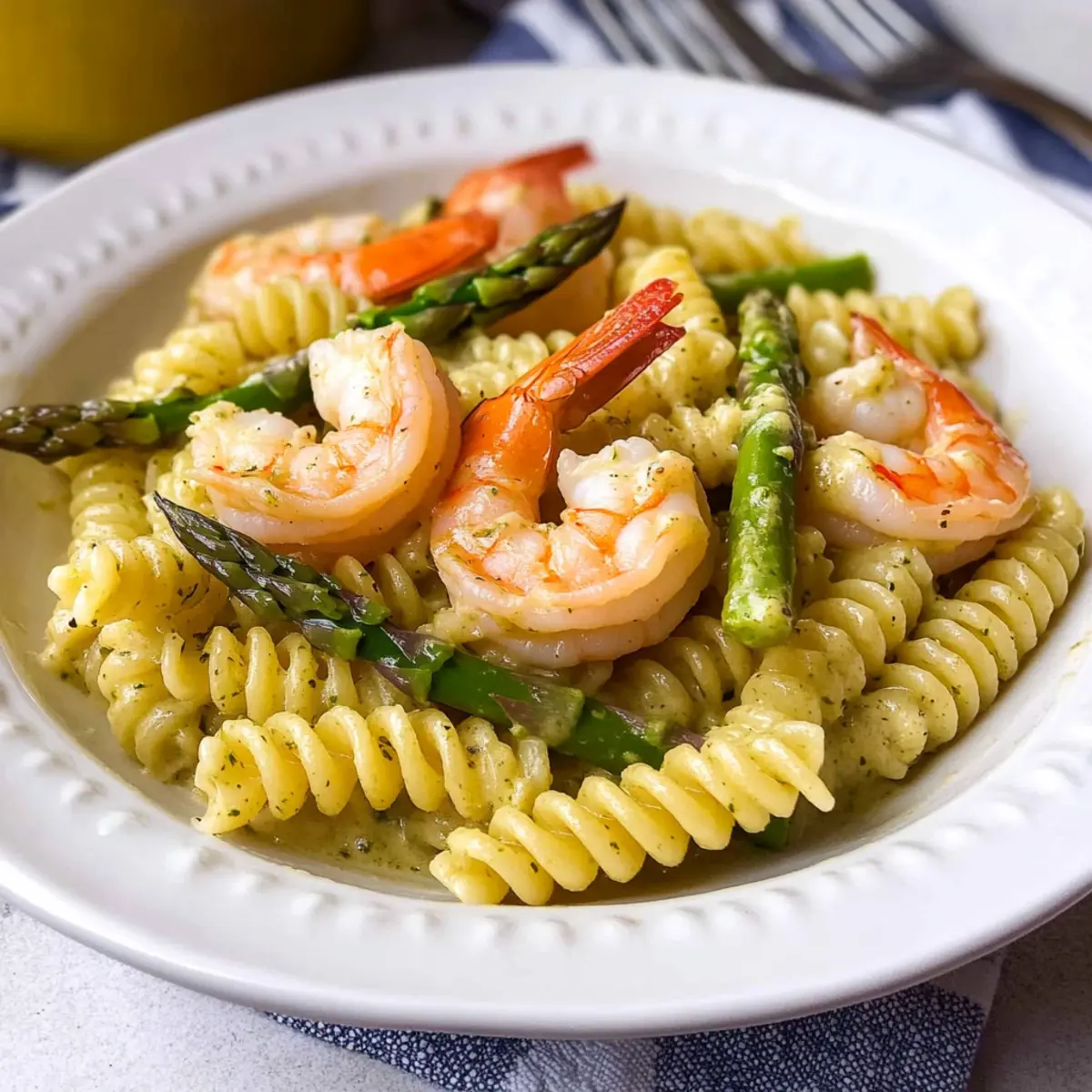
Make Ahead Options
These Shrimp and Asparagus Pasta preparations are perfect for busy home cooks looking to save time during the week! You can prep the creamy asparagus sauce and the shrimp up to 24 hours in advance. Simply blanch and blend the asparagus with Parmigiano, then store it in an airtight container in the refrigerator to prevent browning. For the shrimp, clean and season them, keeping them ready to sauté. On the day you plan to serve, just cook your fusilli, toss in the shrimp to sauté for a couple of minutes, and mix everything with the prepared sauce. This way, you’ll have a restaurant-quality meal waiting for you with minimal effort!
Expert Tips for Shrimp & Asparagus Pasta
-
Cook with Care: Shrimp can turn rubbery when overcooked. Keep a close eye on them, cooking just until they are pink and opaque.
-
Bright Asparagus: Ensure asparagus remains firm and bright green by not overblanching. A quick boil followed by an ice bath retains color and crunch.
-
Sauce Balance: If your sauce seems too thick, add a splash of reserved pasta water to achieve a silky consistency that clings beautifully to the fusilli.
-
Flavor Infusion: Consider infusing olive oil with garlic longer for an even richer flavor before adding your shrimp, but remember to remove the garlic before combining with pasta.
-
Presentation Perfect: Garnish your dish with extra asparagus tips and shrimp on top before serving. It elevates the look and adds a special touch to your meal.
What to Serve with Shrimp and Asparagus Pasta
Elevate your dining experience by pairing this delightful dish with sides that enhance its fresh flavors.
-
Garlic Bread: The perfect complement for soaking up the creamy sauce, garlic bread adds a crunchy contrast to the tender pasta.
-
Mixed Green Salad: A refreshing salad with a light vinaigrette balances the richness of the pasta, offering a crisp and vibrant bite.
-
Roasted Cherry Tomatoes: Bursting with sweetness, they provide an additional layer of flavor that beautifully contrasts with the savory shrimp and asparagus.
-
Sparkling White Wine: A chilled glass of Pinot Grigio or Prosecco brings a bubbly brightness that enhances the dish’s fresh seafood elements.
-
Lemon Sorbet: For dessert, this light and tangy sorbet cleanses the palate, leaving a refreshing finish after the rich pasta.
-
Zucchini Noodles: For a low-carb alternative, serve a side of zucchini noodles lightly sautéed; they add texture while maintaining a fresh taste.
Storage Tips for Shrimp & Asparagus Pasta
-
Refrigeration: Store leftover Shrimp & Asparagus Pasta in an airtight container in the fridge for up to 1 day. This helps retain its vibrant flavors and creamy texture.
-
Reheating: To reheat, gently warm the pasta in a skillet over low heat, adding a splash of water or olive oil. This ensures the sauce remains creamy and doesn’t dry out.
-
Freezing: Freezing is not recommended due to potential texture loss in the shrimp and asparagus, making them less enjoyable when thawed and reheated.
Shrimp & Asparagus Pasta Variations
Feel free to let your culinary creativity shine and make this dish your own!
- Chili Pepper: Add some heat by sautéing red pepper flakes with the garlic for a delightful kick.
- Creaminess: For an unforgettable richness, stir in a splash of heavy cream to the asparagus sauce.
- Pasta Shape: Experiment with different pasta shapes! Tagliatelle or paccheri can provide a unique texture twist.
- Veggie Boost: Toss in additional spring veggies like fresh peas or sweet zucchini for extra color and flavor.
- Herb Infusion: Incorporate fresh herbs such as basil or parsley to brighten the dish and elevate the flavor.
- Lemon Zest: A sprinkle of lemon zest before serving can provide a refreshing brightness that balances the creaminess.
- Protein Swap: Swap shrimp for chicken or even plant-based proteins like chickpeas for a delightful twist.
- Nutty Finish: Top with toasted pine nuts or slivered almonds for a nice crunch and nutty flavor.
Looking to spice things up? Try this dish’s cousin, the rich Creamy Cajun Chicken Pasta, or savor the flavors of Creamy Garlic Shrimp Pasta. Enjoy your culinary journey!
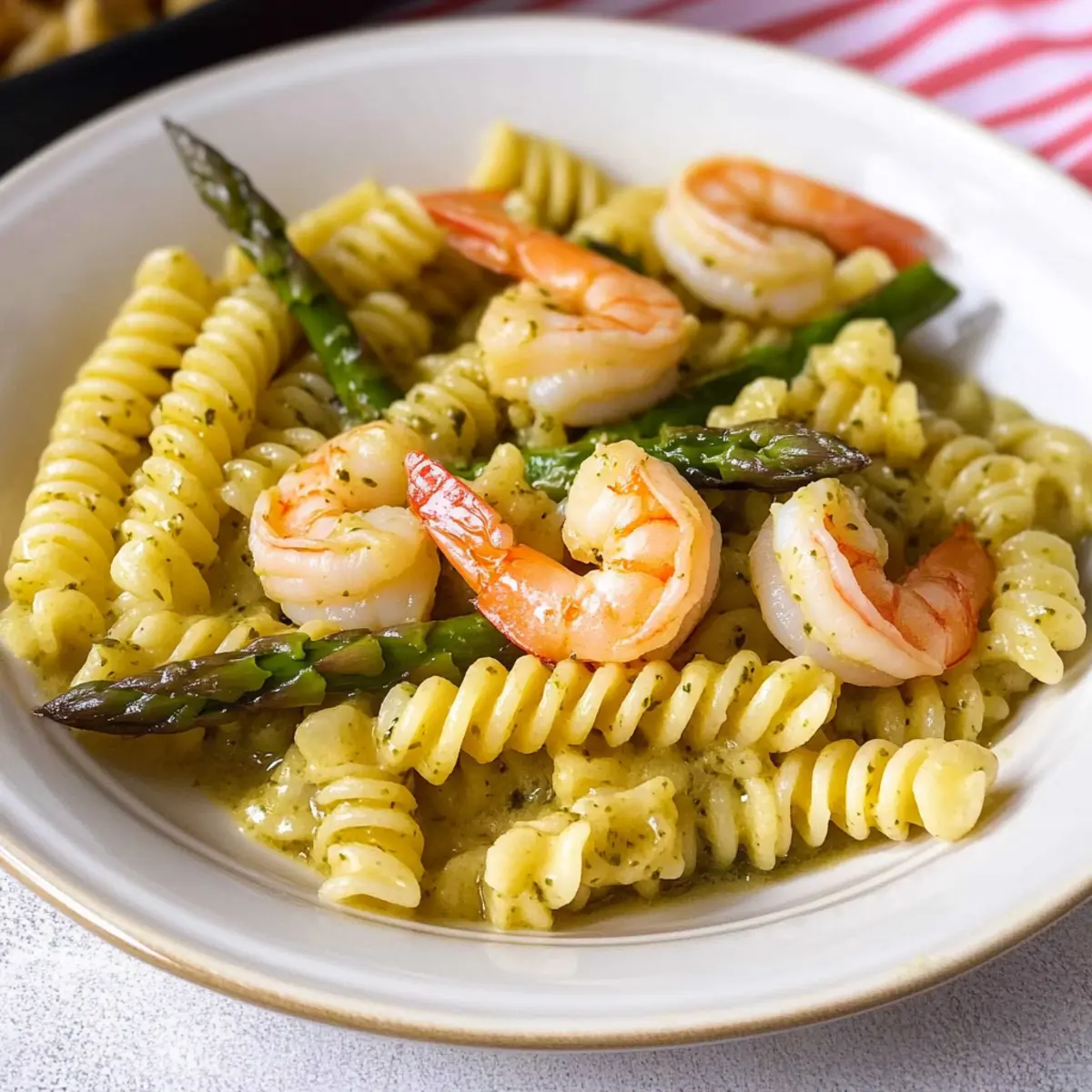
Shrimp & Asparagus Pasta Recipe FAQs
What type of asparagus is best for this dish?
Absolutely! Look for firm, vibrant green asparagus spears without dark spots or wilting. Fresh asparagus should snap when bent, ensuring the best flavor and texture for your Shrimp & Asparagus Pasta.
How should I store leftovers?
Store any leftover Shrimp & Asparagus Pasta in an airtight container in the refrigerator for up to 1 day. When storing, keep the container sealed well to preserve its creamy texture and delicious flavors.
Can I freeze Shrimp & Asparagus Pasta?
It’s best to avoid freezing this dish. The texture of both shrimp and asparagus can suffer after thawing, leading to a less enjoyable meal. Instead, I recommend enjoying it fresh to truly savor its unique flavors.
What can I do if my shrimp turns rubbery?
If you find that your shrimp have turned rubbery, it may be due to overcooking. To keep them tender, cook them just until they turn pink and opaque, which usually takes about 2-3 minutes. Remember, cooking shrimp quickly over medium heat ensures they remain juicy!
Can I modify this recipe due to dietary restrictions?
Certainly! For dairy-free options, substitute the grated Parmigiano with nutritional yeast or a dairy-free cheese alternative. Also, if you are allergic to shellfish, you can replace shrimp with grilled chicken or firm tofu for a delicious variation. It’s very versatile!
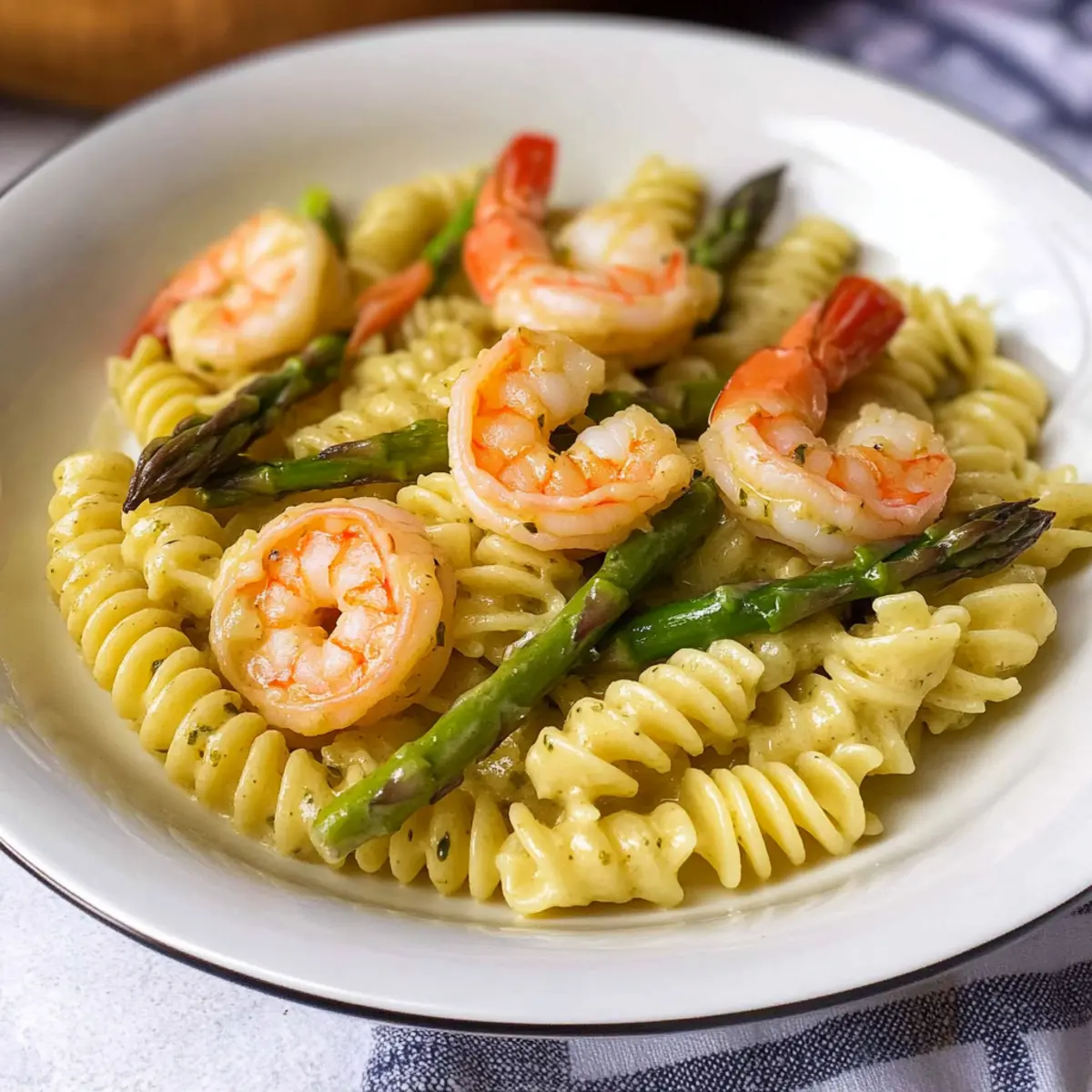
Shrimp & Asparagus Pasta: A Light and Creamy Delight
Ingredients
Equipment
Method
- Trim the woody ends of the asparagus and peel the bottom half of the stalks. Bring a pot of water to a boil and blanch asparagus for 8-10 minutes until bright green and slightly crisp.
- Transfer the cooked asparagus to a bowl of ice water. Once chilled, cut into smaller pieces, then blend with grated Parmigiano Reggiano until smooth.
- Peel and devein the shrimp, rinse them under cold water, and pat them dry with a paper towel.
- Heat olive oil in a large skillet over medium heat. Infuse with a garlic clove, then add shrimp and sauté for 2-3 minutes until pink and opaque.
- Bring salted water to a boil in a separate pot. Cook fusilli according to package directions until al dente, about 8-10 minutes. Reserve a cup of pasta water before draining.
- Return the skillet to low heat, add drained fusilli and reserved asparagus tips, and mix with creamy asparagus sauce. Add a splash of pasta water to combine.
- Serve the Shrimp & Asparagus Pasta immediately, garnished with reserved shrimp and asparagus tips.
Leave a Reply