
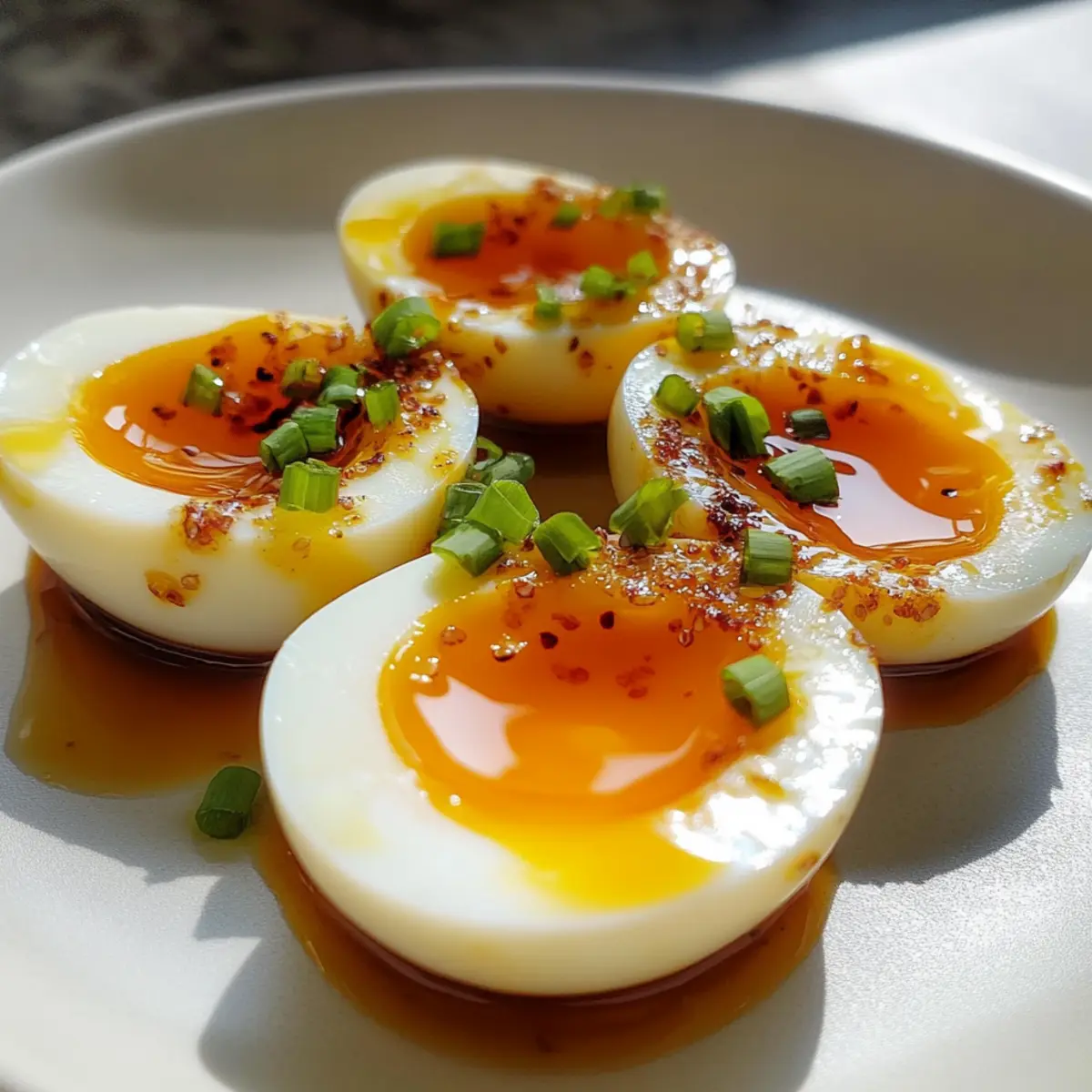
As I stood in my kitchen, the aroma of boiling water mingled with the anticipation of creating something special, I discovered that ramen eggs—known as Ajitsuke Tamago—have a magical way of transforming simple bowls of noodles into culinary masterpieces. These delightful soft-boiled eggs, marinated in a savory mixture of soy sauce and mirin, not only add an irresistible umami flavor but also bring a gourmet touch to your homemade dishes. The beauty of this recipe lies in its quick preparation, making it perfect for busy weeknights, and can be prepped ahead for meal planning enthusiasts. Imagine topping your steaming ramen with these silky, runny yolks, elevating every bite into a delicious experience. Are you ready to dive into the world of authentic Japanese cuisine and make your ramen nights extraordinary?
Why Are Ramen Eggs So Irresistible?
Umami Explosion: The rich soy and mirin marinade brings out a depth of flavor that takes your dishes to new heights.
Quick Prep: Ready in under 30 minutes, making this a fantastic addition to your busy weeknight meals.
Versatile Topping: Perfect for ramen, but also enhances salads and rice bowls, giving them a gourmet flair.
Meal Prep Friendly: Marinate in advance and enjoy these delicious eggs for up to three days, making it easier to enjoy homemade meals throughout the week.
Elevate Any Dish: Whether you’re a novice cook or a seasoned chef, these ramen eggs are an easy way to impress your family and friends with a touch of Japanese elegance. If you’re curious about more Japanese cuisine, you might enjoy exploring other flavorful recipes!
Ramen Eggs Ingredients
• For the Eggs
- Large Eggs – Provide structure and creaminess; can substitute with medium-sized eggs, adjusting cooking time slightly.
• For the Marinade
- Soy Sauce – Adds rich umami flavor; for gluten-free, swap with tamari.
- Mirin – A sweet rice wine that contributes depth; can be replaced with rice vinegar mixed with sugar for a similar taste.
- Sugar – Balances the saltiness of soy sauce; adjust sweetness with more or less sugar as desired.
Step‑by‑Step Instructions for Ramen Eggs
Step 1: Boil the Eggs
Start by bringing a pot of water to a rolling boil over medium-high heat. Once boiling, gently lower in 4 large eggs using a slotted spoon. Boil the eggs for 6-7 minutes to achieve that coveted runny yolk. For firmer yolks, extend the boiling time to 8 minutes. Keep an eye on the clock to ensure perfect doneness!
Step 2: Ice Bath
As soon as the eggs finish boiling, carefully transfer them to an ice bath using the slotted spoon. This process stops the cooking immediately, preserving that ideal softness. Let the eggs sit in the ice bath for about 5-10 minutes. You’ll know they’re ready when they are completely cool to the touch, making them easier to peel.
Step 3: Prepare Marinade
While the eggs are cooling, in a separate mixing bowl, combine 1/4 cup of soy sauce, 1/4 cup of mirin, and 1 tablespoon of sugar. Stir well until the sugar dissolves completely, creating a smooth, fragrant marinade. The rich aroma will set the stage for the delicious Ramen Eggs that’ll soon elevate your dishes!
Step 4: Peel the Eggs
Once the eggs have cooled, it’s time to peel them. Gently tap each egg on a hard surface to crack the shell and then roll them lightly to loosen. If any bits are stubbornly sticking, you can rinse the egg under cool water to help you peel it off cleanly. It’s all about revealing that beautiful, soft-boiled center!
Step 5: Marinate
Now, place the peeled eggs into a shallow dish and pour your marinade over them, ensuring they are fully submerged. Cover the dish tightly and refrigerate for at least 3 hours, but overnight is preferred for stronger flavors. You’ll notice the transformation as the eggs soak in that savory goodness, making your Ramen Eggs truly irresistible.
Step 6: Serve
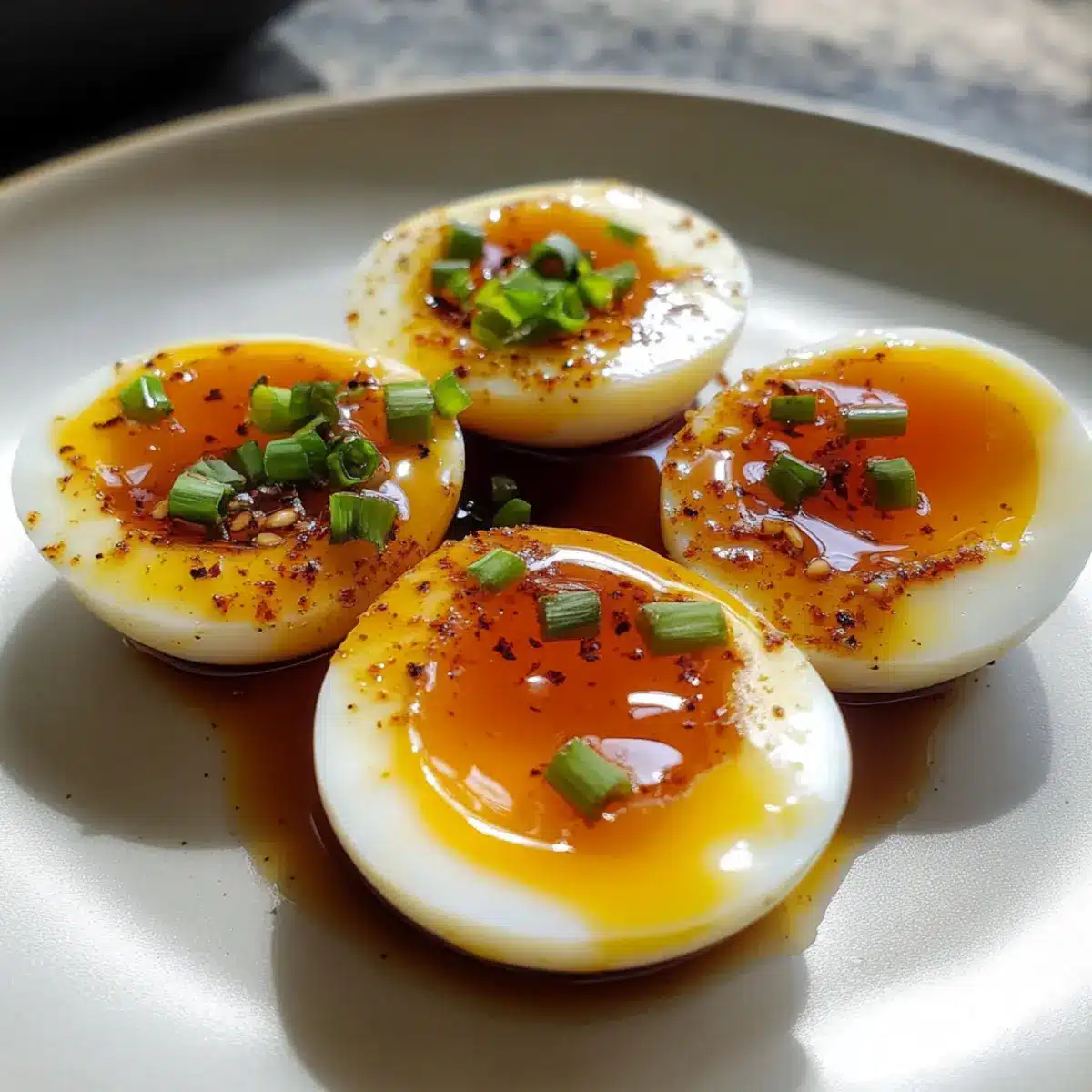
When you’re ready to serve, slice each marinated egg in half to reveal the luscious, creamy yolk inside. These gorgeous Ramen Eggs are now ready to top your bowl of ramen or your favorite noodle dishes. Drizzle with additional marinade for an extra flavor boost, and enjoy the delightful umami richness they bring!

Ramen Eggs: Customization Ideas to Explore
Feel free to get creative with your ramen eggs and enhance their flavor or adapt them to your dietary needs!
- Dairy-Free: Substitute soy sauce with coconut aminos for a milder, sweeter flavor that’s also vegan-friendly.
- Spicy Twist: Add a teaspoon of chili paste to the marinade for an exciting kick that pairs beautifully with the umami richness.
- Herbal Infusion: Consider adding fresh herbs like cilantro or green onions to the marinade for a burst of freshness.
- Garlic Flavor Boost: Introduce minced garlic or garlic powder for an aromatic element that elevates the overall taste.
- Reduced Sodium: Use low-sodium soy sauce in your marinade to enjoy a lighter version without losing flavor.
- Sweet Variations: Swap regular sugar with honey or maple syrup for a natural sweetness that deepens the marinade.
- Unique Marinade Base: Try using miso paste instead of soy sauce for a creamy, umami-packed twist, giving your eggs a wholly new character.
- Additional Veggie Medley: Enhance your bowls by adding marinated vegetables, such as pickled radishes or blanched bok choy, for a vibrant finish to your ramen experience.
Your journey in the kitchen is your own—experimenting with different flavors, textures, and presentations ensures every bite is new and exciting. If you’re intrigued by more ways to adapt recipes, check out my tips on meal prep or delve into other Japanese cuisine favorites that can accompany these delectable ramen eggs!
How to Store and Freeze Ramen Eggs
Fridge: Keep your ramen eggs submerged in the marinade in an airtight container for up to 3 days. This maintains their flavor and delightful texture.
Freezer: For longer storage, ramen eggs can be frozen once marinated; however, the texture may change. Use within 1 month for the best results, thawing overnight in the fridge before use.
Reheating: If you prefer warm ramen eggs, gently soak them in hot water for 5-10 minutes or microwave briefly on low power. Avoid boiling to prevent further cooking.
Enjoy Freshness: Always aim to consume ramen eggs within a few days for optimal taste and enjoy their savory goodness atop your favorite dishes!
Expert Tips for Perfect Ramen Eggs
-
Timing is Crucial: Stick to 6-7 minutes of boiling for a perfect runny yolk; overcooking results in hard yolks that lose their creamy charm.
-
Chill Immediately: Don’t skip the ice bath! It halts cooking and makes peeling the eggs easier, ensuring a beautifully soft texture.
-
Marinate Longer: For the richest flavor, try to marinate your ramen eggs overnight. The longer they soak, the more savory goodness they absorb.
-
Handle with Care: When peeling, tap softly and roll the eggs gently to avoid tearing the delicate whites; rinsing under cool water helps if they stick.
-
Reuse Marinade Wisely: If you have leftover marinade, boil it before reusing to eliminate potential contaminants. Enjoy delicious ramen eggs again!
What to Serve with Authentic Japanese Ramen Eggs
Creating a harmonious meal is all about complementing flavors and textures, and these delicious ramen eggs are the perfect centerpiece to inspire your culinary creativity.
- Steamed Bok Choy: This leafy green adds a vibrant crunch and mild bitterness, balancing the rich flavors of the ramen eggs beautifully.
- Fragrant Rice: Light and fluffy jasmine or sushi rice serves as a canvas for the marinated eggs, absorbing the umami flavors while adding a comforting touch.
- Crispy Tempura Vegetables: The warm, crispy texture of tempura perfectly contrasts the silky smoothness of the ramen eggs, creating an exciting bite every time.
- Sesame Dressing Salad: Fresh greens drizzled with a nutty sesame dressing not only brightens your plate but also introduces fresh flavor notes that enhance the dish.
- Miso Soup: A light, savory miso broth can be a soothing addition to your meal, harmonizing with the umami notes of the ramen eggs while providing warmth.
- Chilled Sake: Sipping on chilled sake elevates your culinary experience, as its clean, crisp taste pairs wonderfully with the rich flavors of the Japanese eggs.
- Ginger-Lime Sorbet: To cleanse your palate, a refreshing sorbet adds a sweet-and-tangy contrast, leaving a delightful aftertaste after enjoying your meal.
Each of these pairings will harmonize beautifully with your ramen eggs, transforming your dining experience into a feast of flavors and textures. Enjoy the exploration!
Make Ahead Options
These Ramen Eggs are a fantastic choice for meal prep enthusiasts! You can boil and marinate the eggs up to 24 hours in advance to save time during busy weeknights. Start by preparing the eggs as per the instructions, then follow through with the marination process. Once marinated, these soft-boiled treasures will keep well in the refrigerator for up to 3 days, allowing the flavors to continue developing. To maintain their quality, ensure the eggs remain submerged in the marinade while stored. When ready to serve, simply slice them in half and place atop your ramen for that delicious touch of umami goodness, making meal assembly a breeze!
Ramen Eggs Recipe FAQs
How do I know if my eggs are ripe for boiling?
Absolutely! For the best results, use large eggs that are no more than a week old. Fresh eggs can be harder to peel. Look for eggs that are free from any cracks or dark spots and have smooth shells.
How should I store my ramen eggs after preparing them?
Very simple! Store your ramen eggs submerged in the marinade in an airtight container in the refrigerator. They will stay fresh and flavorful for up to 3 days. Just make sure to cover them well to prevent exposure to air.
Can I freeze ramen eggs?
Yes, you can! For optimal flavor and texture, freeze your ramen eggs within a month after marinating. Simply place the eggs, coated in their marinade, into a freezer-safe container. To use, thaw them overnight in the fridge and gently reheat using hot water for the best results.
What if my eggs turned out rubbery?
Don’t worry, it happens! If your eggs are rubbery, this usually means they were overcooked. For perfect results, boil them for 6-7 minutes for a runny yolk. Consider a kitchen timer to help keep track, and remember to chill them immediately in an ice bath after boiling to halt further cooking.
Are ramen eggs safe for people with allergies?
Great question! Ramen eggs are generally safe, but be cautious of soy sauce, which contains gluten and can trigger allergies. For gluten-free options, simply swap soy sauce with tamari. Always check for any target allergens based on your specific dietary needs before enjoying!
Ramen Eggs: Perfect Soft-Boiled Treats for Ramen Lovers
Ingredients
Equipment
Method
- Start by bringing a pot of water to a rolling boil over medium-high heat. Once boiling, gently lower in 4 large eggs using a slotted spoon. Boil the eggs for 6-7 minutes to achieve that coveted runny yolk.
- As soon as the eggs finish boiling, carefully transfer them to an ice bath using the slotted spoon. This process stops the cooking immediately, preserving that ideal softness. Let the eggs sit in the ice bath for about 5-10 minutes.
- While the eggs are cooling, in a separate mixing bowl, combine 1/4 cup of soy sauce, 1/4 cup of mirin, and 1 tablespoon of sugar. Stir well until the sugar dissolves completely.
- Once the eggs have cooled, gently tap each egg on a hard surface to crack the shell and then roll them lightly to loosen. If any bits are stubbornly sticking, you can rinse the egg under cool water.
- Now, place the peeled eggs into a shallow dish and pour your marinade over them, ensuring they are fully submerged. Cover the dish tightly and refrigerate for at least 3 hours, preferably overnight.
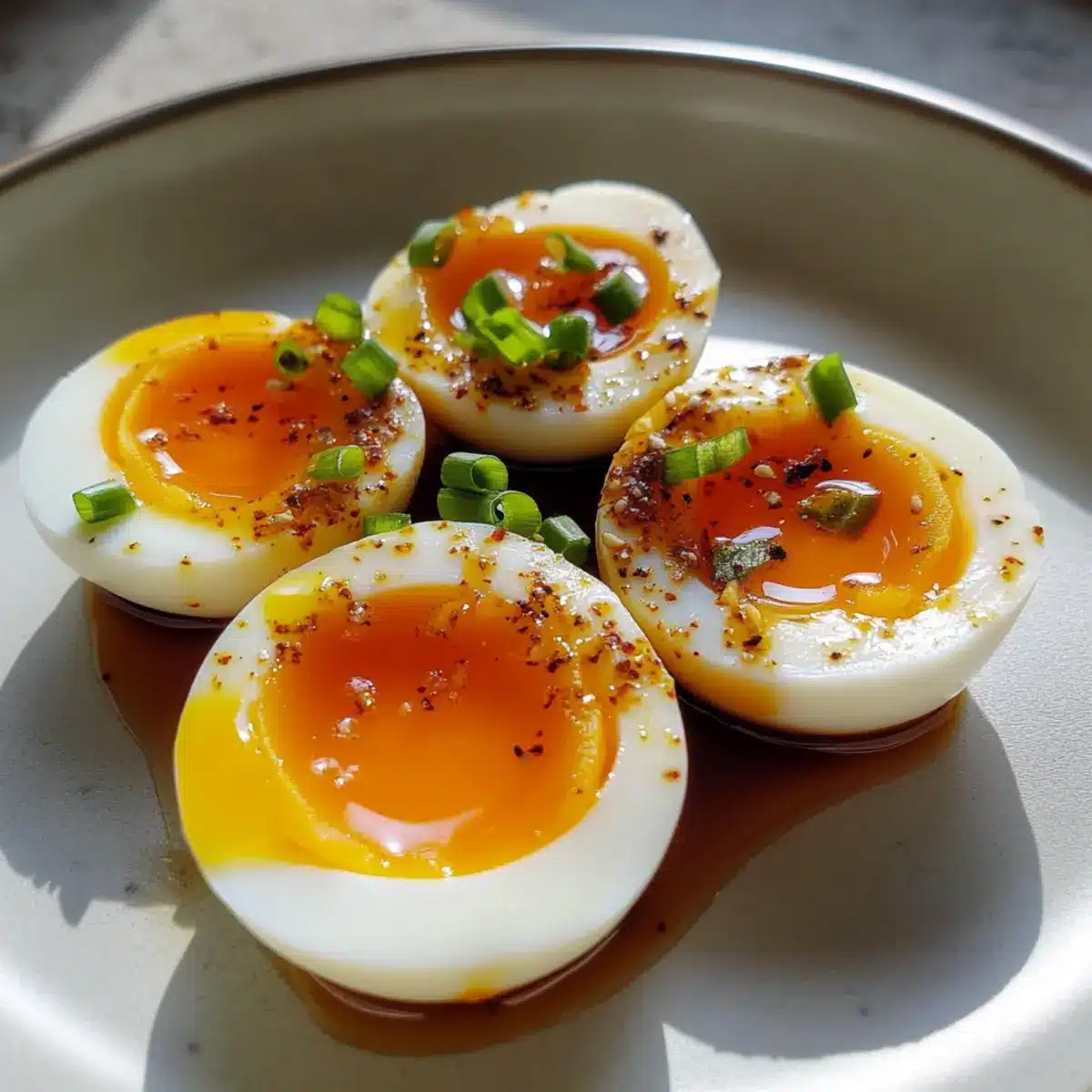
- When you're ready to serve, slice each marinated egg in half to reveal the luscious, creamy yolk inside. These gorgeous Ramen Eggs are now ready to top your bowl of ramen or favorite noodle dishes.
Leave a Reply