
Close your eyes for a moment, and let the irresistible aroma of sizzling vegetables and savory soy sauce waft through your kitchen. That’s the essence of Japchae, an authentic Korean dish that’s a game-changer for those craving homemade comfort food. Featuring chewy sweet potato glass noodles that soak in the flavors of tender beef and vibrant vegetables, this dish is not just a meal; it’s an experience! Whether you’re looking for a quick weeknight dinner or planning a feast for friends, Japchae is incredibly customizable—it shines with options from juicy chicken to hearty tofu for a vegetarian twist. Plus, it’s gluten-free with the right noodles, making it a delicious choice for everyone at the table. Are you ready to dive into the world of Korean cuisine and create your very own Japchae masterpiece? Let’s get cooking!
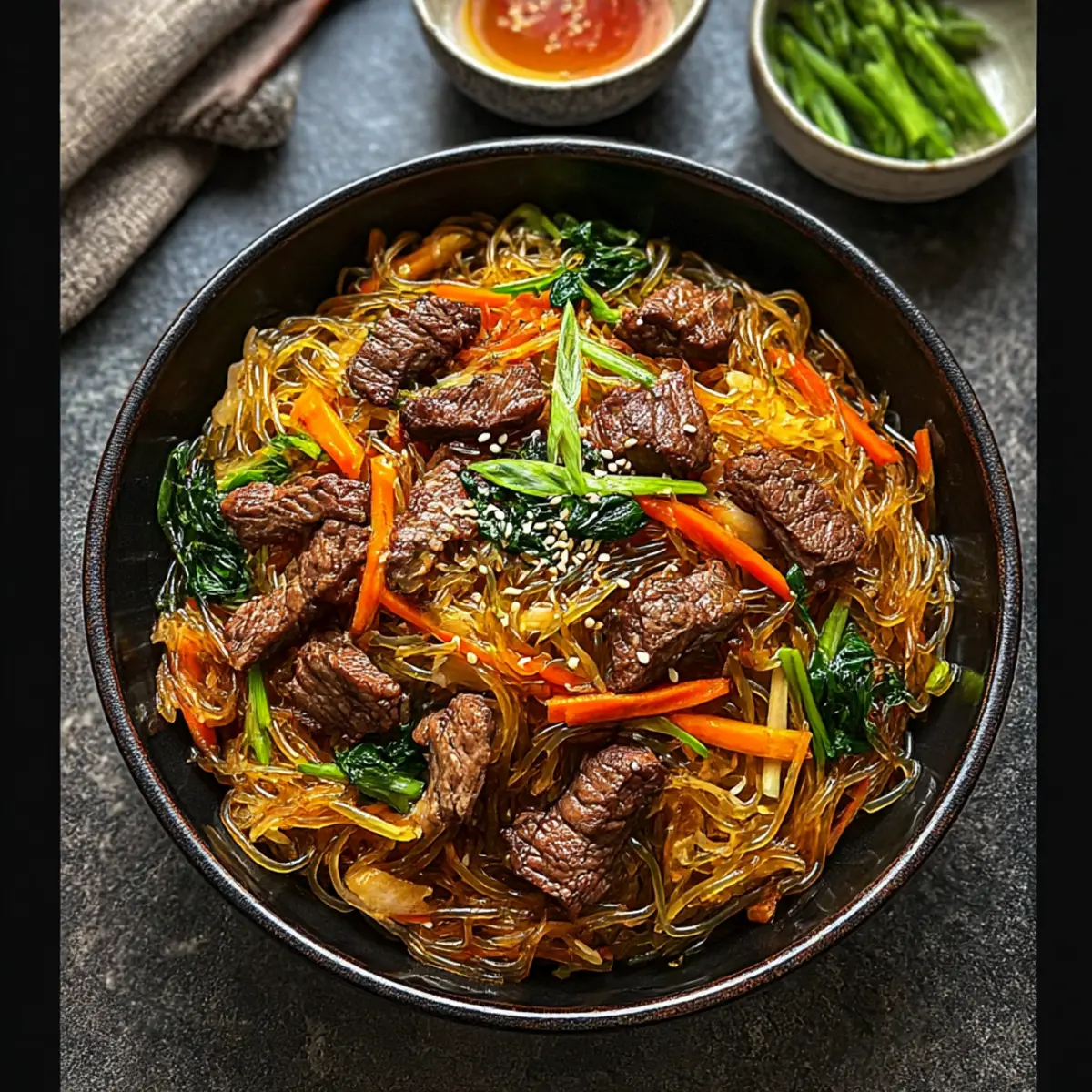
Why Is Japchae a Must-Try Dish?
Unique Texture: The chewy sweet potato glass noodles create a delightful eating experience that sets Japchae apart from other stir-fries.
Flavorful Adventure: This dish marries savory soy sauce with nutty sesame oil, creating a robust flavor profile that will tantalize your taste buds.
Customizable Options: Whether you prefer hearty beef, succulent chicken, or plant-based tofu, Japchae can adapt to your dietary needs without losing its charm.
Quick and Easy: Perfect for busy weeknights, this recipe comes together in under 30 minutes, keeping your evenings stress-free.
Family-Friendly Appeal: Kids and adults alike will be entranced by the colorful veggies and irresistible noodles, making this dish a hit at any gathering.
Why not try serving it warm alongside rice or as part of a larger Korean meal spread for an unforgettable dining experience?
Japchae Ingredients
For the Noodles
• Sweet Potato Glass Noodles (Dangmyeon) – These noodles provide an essential chewy texture and glossy appearance; they are the star of your Japchae!
For the Stir-Fry
• Beef (Tender Slices) – Adds a rich flavor and protein boost; feel free to substitute with chicken, tofu, or mushrooms for a vegetarian version.
• Vegetables (Carrots, Spinach, Bell Peppers, etc.) – Choose an assortment for color and nutrition; seasonal vegetables can bring new life to your Japchae.
• Soy Sauce – This adds umami and saltiness; consider using low-sodium soy sauce for a lighter option.
• Sesame Oil – Contributes a nutty aroma; substitute with olive oil if necessary, but this will change the flavor profile.
• Green Onions – Offers a fresh crunch; red onions or shallots can also work wonders in this dish.
• Sugar – Balances the savory flavors; you could swap it with honey or an alternative sweetener if desired.
Optional Add-Ins
• Gochujang (Korean Chili Paste) – For an added kick of spice, consider mixing this in!
• Zucchini or Mushrooms – Excellent vegetables to incorporate when you want to diversify your dish.
Step‑by‑Step Instructions for Japchae
Step 1: Prep Noodles
Begin by soaking the sweet potato glass noodles in warm water for about 30 minutes until they become soft and pliable. You should notice them expanding and turning pliable. After soaking, drain the noodles in a colander and set them aside to ensure they’re ready for stir-frying.
Step 2: Prepare Ingredients
While the noodles are soaking, take this time to slice the beef into thin strips and chop your vegetables into bite-sized pieces. Aim for uniformity in size so they cook evenly. Gather all your ingredients near your cooking area to streamline the process, making “Japchae” assembly quick and efficient.
Step 3: Cook Beef
Heat a large skillet or wok over high heat, then add a splash of oil. Once the oil is shimmering, quickly add the sliced beef and stir-fry for about 3-4 minutes until it’s browned but still tender. Remove the beef from the pan and set it aside, allowing the flavors to enhance as you continue with the rest of the dish.
Step 4: Sauté Vegetables
In the same skillet, add a bit more oil if needed. Toss in your chopped vegetables, starting with the ones that take longer to cook, like carrots and bell peppers. Stir-fry for about 3-5 minutes until they are vibrant and tender but still have a slight crunch. This colorful medley will contribute to the appeal of your Japchae.
Step 5: Combine Noodles & Flavors
After the vegetables are cooked, add the soaked glass noodles, cooked beef, soy sauce, sesame oil, and sugar to the skillet. Stir everything together over high heat for about 7-10 minutes. You want the noodles to absorb the flavors and become glossy, ensuring everything is heated through and well-combined to create a stunning plate of Japchae.
Step 6: Finish
Once everything is thoroughly mixed, remove the pan from heat. Garnish your delicious Japchae with chopped green onions for a fresh touch before serving. Consider a quick final drizzle of sesame oil for extra flavor. Your dish is now ready to bring smiles to the dinner table!
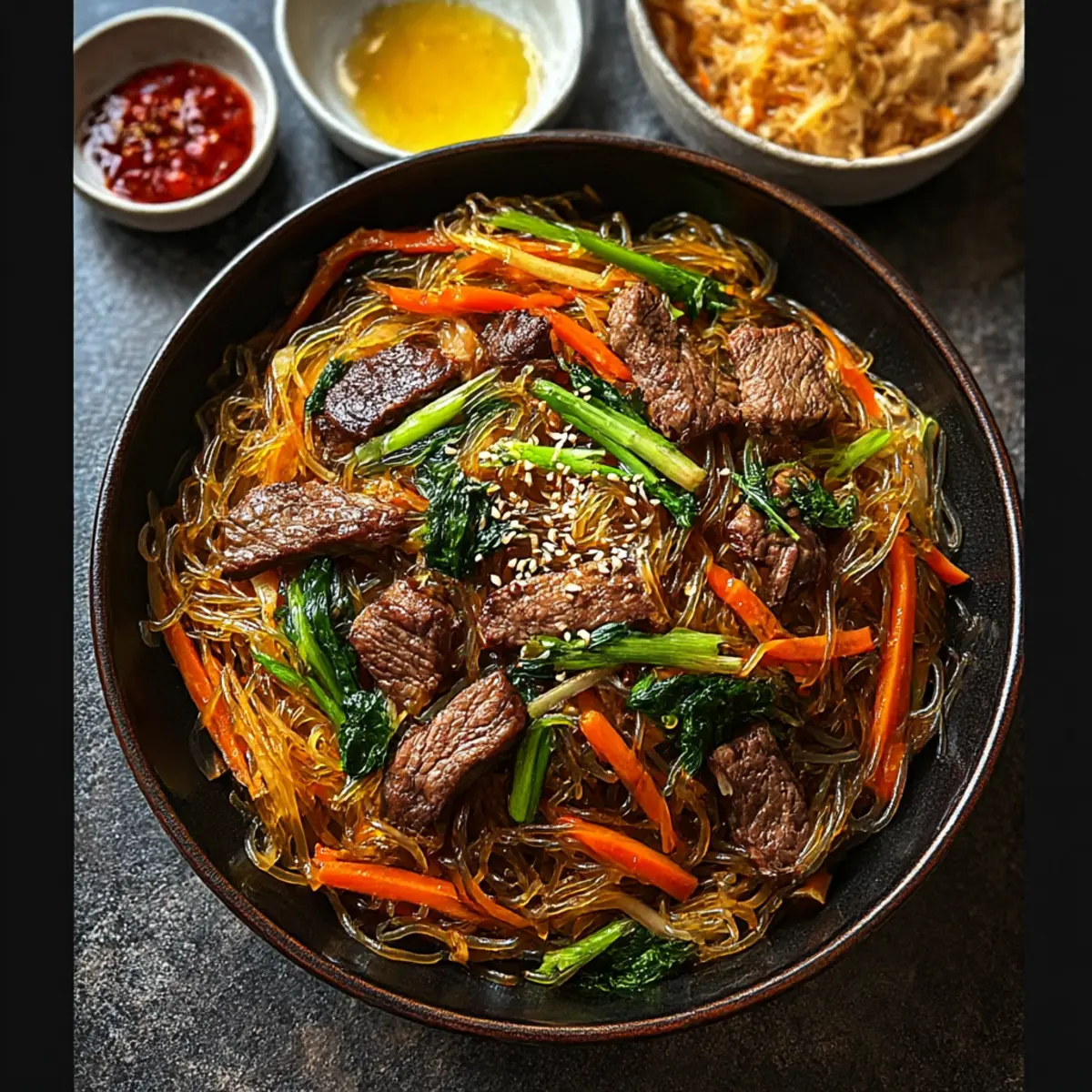
How to Store and Freeze Japchae
-
Fridge: Store leftover Japchae in an airtight container for up to 3 days. The flavors will continue to meld, making it even tastier the next day!
-
Freezer: For longer storage, place cooled Japchae in a freezer-safe container and store for up to 2 months. Thaw in the fridge before reheating.
-
Reheating: Gently reheat in a skillet over low heat, adding a splash of water or soy sauce to prevent sticking and revitalize the flavors.
-
Serving Cold: Enjoy it straight from the fridge as a refreshing cold dish—perfect for summer meals or quick lunches!
Expert Tips for Perfect Japchae
-
Soak Noodles Properly: Ensure the sweet potato glass noodles are soaked for 30 minutes until soft; under-soaked noodles will remain hard and chewy, impacting your Japchae’s texture.
-
High Heat Cooking: Always stir-fry over high heat for a duration to build flavor and achieve that desirable slightly charred finish; this prevents the vegetables from becoming mushy.
-
Don’t Overcook Vegetables: Keep an eye on your vegetables; they should be cooked just until tender but still retain some crunch, adding important texture to your Japchae.
-
Season to Taste: Taste your dish before serving; feel free to adjust soy sauce and sesame oil as necessary for your personal flavor preference.
-
Customize Freely: Don’t hesitate to swap in seasonal veggies or different proteins like chicken or tofu for a delightful variation of this classic dish.
Make Ahead Options
These Japchae are perfect for meal prep enthusiasts! You can soak the sweet potato glass noodles up to 24 hours in advance; simply keep them submerged in water and refrigerate. Additionally, you can slice the beef and chop the vegetables a day ahead for easy assembly. Store the prepped ingredients separately in airtight containers in the refrigerator for up to 3 days to maintain freshness and prevent browning. When you’re ready to serve, simply stir-fry the beef and vegetables as instructed, then add the noodles and sauces for a quick, delightful meal that tastes just as delicious as if it were made fresh!
What to Serve with Authentic Korean Japchae
Close your eyes for a moment, and let the irresistible aroma of sizzling vegetables and savory soy sauce waft through your kitchen. That’s the essence of Japchae, an authentic Korean dish that’s a game-changer for those craving homemade comfort food.
- Fluffy Rice: A side of plain steamed rice absorbs the rich flavors of the Japchae, creating a perfectly balanced bite.
- Korean Kimchi: This tangy, fermented side adds a spicy crunch that contrasts beautifully with the chewy noodles. It enhances the meal’s depth.
- Crispy Salad: A fresh, light salad with crisp greens and a sesame vinaigrette refreshes the palate between bites of savory noodles. It’s a delightful contrast.
- Steamed Broccoli: The slight bitterness of steamed broccoli provides a nourishing side dish, adding vibrant color while complementing the dish’s sweetness.
- Spicy Tofu: Preparing marinated and stir-fried tofu with a kick of spice can turn your meal into a delightful heat experience while still celebrating flavors from the Japchae.
- Citrusy Soju: Pairing your meal with cold Korean soju enhances the authentic experience, offering a smooth drink that refreshes without overpowering.
Japchae Variations and Substitutions
Feel free to play with flavors and ingredients to create your ultimate Japchae masterpiece!
-
Dairy-Free: Use coconut aminos instead of soy sauce for a subtly sweet, gluten-free option.
-
Vegan Delight: Replace beef with a generous serving of tofu or tempeh, marinated for added flavor; this’ll provide a protein-packed twist.
-
Spicy Kick: Mix in gochujang or sriracha for a fiery flavor boost that brings excitement to each bite. This could elevate your standard Japchae into an exhilarating dish!
-
Seasonal Veggies: Toss in peas, zucchini, or asparagus depending on the season; seasonal vegetables not only enhance the visual appeal but also add freshness.
-
Whole Grain Noodles: Swap out sweet potato noodles for whole grain options like buckwheat noodles for a healthier twist that still holds flavor beautifully.
-
Umami Boost: Consider adding a dash of mushroom sauce or oyster sauce to intensify the dish’s savory elements; it makes for a delightful depth of flavor.
-
Extra Crunch: For texture, sprinkle some toasted sesame seeds or crushed nuts on top just before serving, giving your Japchae a delightful crunch.
No matter how you choose to customize your Japchae, keeping the essence of this beloved dish will make every meal memorable! And if you’re looking for more Korean flavors, check out the easy-to-follow Kimchi Fried Rice recipe that pairs perfectly with your Japchae!
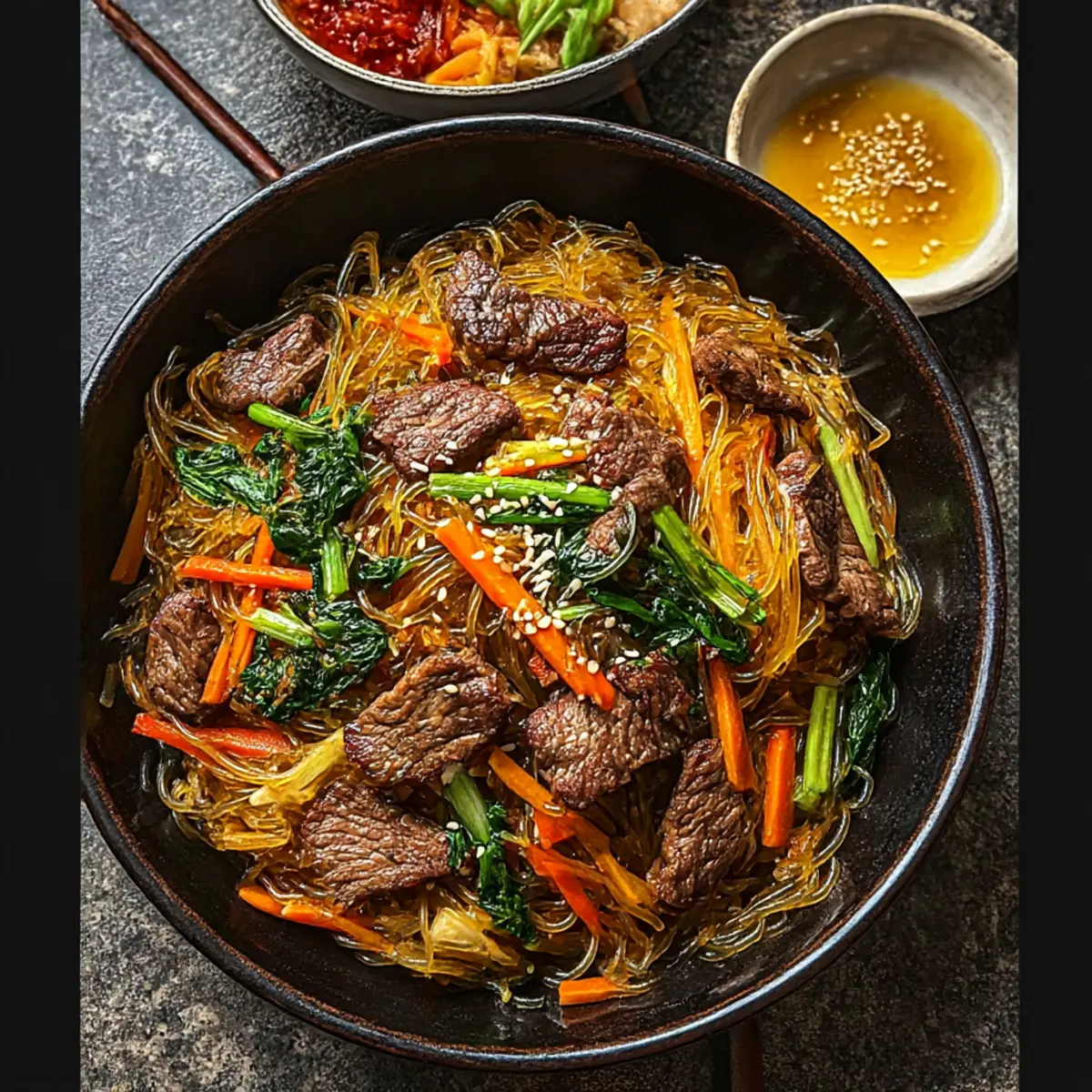
Japchae Recipe FAQs
What type of sweet potato glass noodles should I use?
Absolutely! You should look for “Dangmyeon,” which are specifically made from sweet potato starch. These noodles are crucial for achieving the chewy texture that makes Japchae so delightful. If you can’t find them, other noodles can work, but it may change the authentic feel of the dish.
How do I store leftover Japchae?
Leftover Japchae can be stored in an airtight container in the refrigerator for up to 3 days. Just ensure it’s cooled before sealing to avoid excess moisture. The flavors actually deepen over time, making it a fantastic option for meal prep!
Can I freeze Japchae for later?
Certainly! To freeze, first let your Japchae cool completely, then transfer it to a freezer-safe container. You can keep it for up to 2 months. When you’re ready to enjoy it again, thaw it overnight in the refrigerator, then reheat gently on the stove with a splash of water or soy sauce to restore moisture.
What if my noodles turn out hard?
If your noodles turn out hard, it usually means they were under-soaked or not cooked thoroughly in the stir-fry process. Make sure to soak the glass noodles for a full 30 minutes in warm water before cooking, and stir-fry them over high heat to ensure they absorb the flavors properly.
Is Japchae suitable for people with allergies?
Great question! Japchae can be quite versatile, but if you’re catering to allergies, be mindful of the soy sauce, which contains wheat. Opt for gluten-free soy sauce or tamari to make this dish gluten-free. Additionally, you can substitute proteins and vegetables based on specific dietary needs or preferences.
Can I add more vegetables or change the protein used?
The more the merrier! Feel free to mix in seasonal vegetables or even add your favorites like zucchini or snap peas. You can also switch out the beef for chicken, tofu, or even mushrooms to cater to different tastes and dietary restrictions without losing the essence of Japchae.
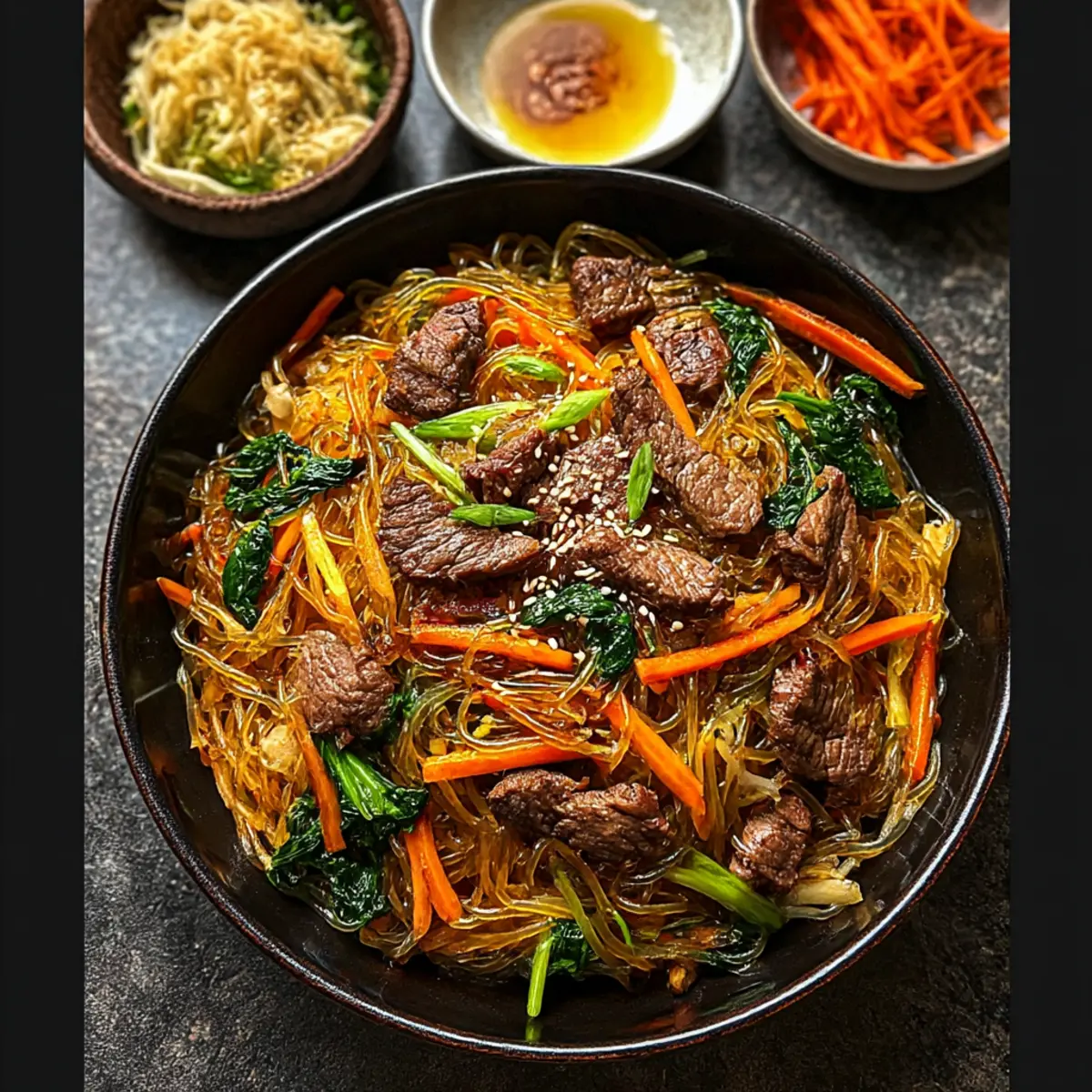
Delicious Japchae: Chewy Sweet Potato Noodles Your Family Will Love
Ingredients
Equipment
Method
- Soak the sweet potato glass noodles in warm water for about 30 minutes until soft. Drain and set aside.
- Slice beef into thin strips and chop vegetables into bite-sized pieces.
- Heat a skillet over high heat, add oil, and stir-fry the beef for 3-4 minutes until browned. Remove from pan.
- In the same skillet, add more oil and stir-fry chopped vegetables for 3-5 minutes until tender but still crunchy.
- Add soaked noodles, cooked beef, soy sauce, sesame oil, and sugar to the skillet. Stir-fry for 7-10 minutes.
- Remove from heat and garnish with chopped green onions before serving. Drizzle with sesame oil if desired.
Leave a Reply