
The first chill of autumn brought a comforting thought to my mind: the delightful warmth of Dakgomtang, a traditional Korean chicken soup that’s been my go-to remedy for cozy nights and rainy days. This easy recipe bursts with rich, milky broth and tender chicken, creating a heartwarming meal perfect for gathering loved ones. With aromatic garlic and ginger, Dakgomtang not only warms you up but is also incredibly customizable; you can toss in your favorite veggies to suit your taste. What I love most is how quickly it comes together, making it an ideal choice for busy weeknights when you crave something heartfelt and homemade. Curious about how this delicious soup can transform your dinner table? Let’s dive into the recipe and discover the magic of Dakgomtang together!

Why is Dakgomtang so beloved?
Simplicity makes it approachable for everyone, no fancy techniques required! Rich flavors come from garlic and ginger, creating a delightful, aromatic broth that warms your soul. Customizable with your favorite vegetables, Dakgomtang can suit any taste preference, making it perfect for family gatherings. Its heartiness with tender chicken offers crowd appeal, sure to win over even the pickiest eaters. Plus, it comes together in under an hour, making it a quick yet satisfying option for weeknight dinners. Try serving it with some hot, steamed rice and a side of kimchi for a truly authentic experience!
Dakgomtang Ingredients
Dive into the heart of comfort food with these essential ingredients for your Dakgomtang (Korean Chicken Soup).
For the Soup Base
- Whole Chicken (3 to 4 pounds) – Main protein source providing rich flavor and texture. Use bone-in parts for better broth flavor.
- Garlic (10-12 cloves) – Adds depth and aroma to the broth. Adjust quantity based on preference.
- Ginger (1-inch piece, sliced) – Enhances warmth and flavor. Fresh ginger is recommended for maximum potency.
- Onion (1/2 medium) – Contributes sweetness and body to the broth. Yellow or white onions work well.
- Scallion (2-3 white parts) – Offers fragrant notes; use green parts for garnish to enhance dish presentation.
For Seasoning
- Whole Black Peppercorns (1/2 teaspoon) – Adds spice and complexity; can substitute with ground black pepper if unavailable.
- Salt and Pepper to Taste – Essential for seasoning; use kosher salt for best results.
For Garnish
- Chopped Scallions (3, for garnish) – Provides freshness and color when serving.
Optional Spicy Sauce (Dadaegi)
- Gochugaru, minced garlic, soy sauce, and chicken broth – Mix these for added heat and flavor, perfect if you like a kick in your Dakgomtang.
Step‑by‑Step Instructions for Dakgomtang (Korean Chicken Soup)
Step 1: Prepare the Chicken
Start by placing a cleaned whole chicken (3 to 4 pounds) in a large stock pot. Cover the chicken with about 10 cups of water, ensuring it’s fully submerged. This forms the base for your Dakgomtang. Position the pot over high heat and wait for the water to come to a rolling boil, signaling that the flavors are about to develop.
Step 2: Add Aromatics
Once boiling, add in the aromatic ingredients: 10-12 cloves of garlic, the sliced 1-inch piece of ginger, half a medium onion, and the white parts of 2-3 scallions. As these ingredients cook, you’ll notice their fragrant aromas rising. Make sure to skim off any foam that forms on the surface to maintain a clear broth. Reduce heat to medium-high and cover the pot.
Step 3: Simmer the Soup
Allow the soup to simmer gently for 40-50 minutes, keeping it covered. This slow cooking process tenderizes the chicken while infusing the broth with rich flavors from the garlic and ginger. Occasionally check for doneness by ensuring the chicken is cooked through, with juices running clear when pierced.
Step 4: Shred the Chicken
Once the chicken is fully cooked, carefully remove it from the pot using tongs or a slotted spoon. Let it cool for a few minutes, then shred the meat into bite-sized pieces using two forks. Be mindful to discard the skin and bones if desired while preparing the Dakgomtang.
Step 5: Enhance the Broth
For a richer broth, you can return any leftover bones to the pot. Simmer the broth for an additional 30-60 minutes, allowing the flavors to deepen. Keep the pot covered to maintain moisture while developing a creamy, comforting texture that will be characteristic of your Dakgomtang.
Step 6: Strain and Serve
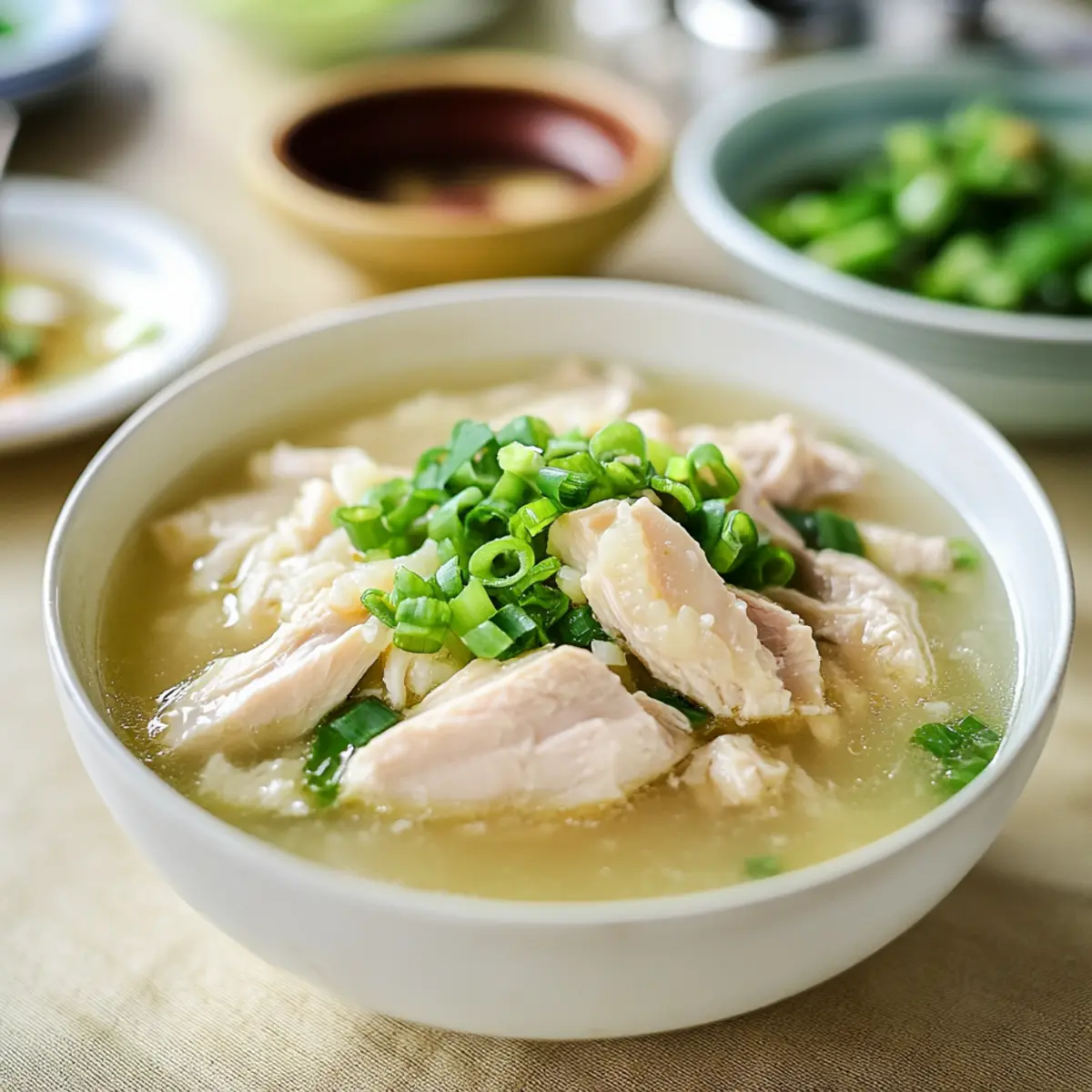
After simmering, strain the broth through a fine mesh sieve into a large bowl, discarding solids like bones and large pieces of ginger. Allow the broth to cool slightly before skimming off any excess fat that has risen to the surface. Serve your hot Dakgomtang with shredded chicken, cooked rice, and garnish with chopped scallions for a colorful finish.
Make Ahead Options
Dakgomtang (Korean Chicken Soup) is a fantastic recipe for meal prep enthusiasts! You can prepare the broth and shred the chicken up to 3 days in advance, making it a perfect option for busy weeknights. Start by cooking your Dakgomtang as directed, then cool the broth completely before refrigerating it in an airtight container. To maintain quality, be sure to skim off any excess fat after cooling. When you’re ready to serve, simply reheat the broth gently on the stove, add your shredded chicken back in, and warm it through for delightful, comforting results. Enjoy the convenience of having this soothing soup ready to go—just as delicious as when made fresh!
What to Serve with Easy Dakgomtang: A Soothing Korean Chicken Soup
Elevate your cozy bowl of Dakgomtang with delightful sides and treats that fully round out your meal experience.
-
Hot Steamed Rice: Perfectly fluffy rice absorbs the soup’s rich broth, creating a satisfying, comforting base that enhances every bite.
-
Spicy Kimchi: The zesty crunch of kimchi provides a delightful contrast to the creamy soup while adding a bold flavor punch.
-
Napa Cabbage Salad: A fresh napa cabbage salad introduces a crisp, refreshing texture, balancing the richness of the soup with a light, tangy dressing.
-
Korean Pickled Radish: The subtle sweetness and crunch of pickled radish complement the savory soup, cleansing the palate and elevating flavors.
-
Savory Scallion Pancakes: These crispy, savory pancakes bring a delightful chewiness that pairs beautifully with the Dakgomtang’s brothiness.
-
Ginger Tea: A warm cup of ginger tea is soothing and helps enhance the comforting experience, perfect for chilly evenings.
-
Daifuku (Sweet Rice Cake): For a sweet finish, enjoy the chewy texture of daifuku filled with sweet red bean paste; it’s a delightful way to end your meal.
Indulging in these accompaniments creates a well-rounded table that embraces the warm, heartening spirit of Korean cuisine.
Dakgomtang (Korean Chicken Soup) Variations
Feel free to make this comforting dish your own by adding favorite ingredients or adjusting flavors to delight your palate!
-
Vegetable Boost: Add chopped napa cabbage or Korean radish for extra nutrients and a delightful crunch. Together they elevate the soup’s texture!
-
Spicy Kick: Mix gochugaru into the broth for a flavorful heat that dances on your taste buds. A spoonful of this spice can awaken the whole dish!
-
Alternate Proteins: Use bone-in chicken thighs or legs instead of a whole chicken for a more tender bite and quicker cooking time. This twist lends a satisfying depth to your Dakgomtang.
-
Herb Infusion: Throw in fresh herbs like cilantro or basil just before serving for a fragrant lift. They offer a unique brightness that complements the warm broth beautifully!
-
Soy Sauce Substitution: Switch to gluten-free soy sauce if you’re avoiding gluten; you won’t lose flavor, just a bit of worry about your dietary needs.
-
Creamy Upgrade: Stir in a splash of coconut milk for an extra creamy consistency. It creates a luscious twist that’s perfect for cozy dinners.
-
Save Time: Utilize store-bought chicken stock for a quicker base; enhance it with fresh garlic and ginger for added harmony. It shortens preparation while still delivering deep, rich flavors.
Explore these variations or find inspiration to create your own. If you’re craving more chicken goodness, try pairing your Dakgomtang with some delicious Garlic Parmesan Chicken or indulge in Chicken Alfredo Lasagna for a comforting meal spread!
How to Store and Freeze Dakgomtang
Fridge: Store leftover Dakgomtang in an airtight container for up to 3 days. This allows the flavors to meld beautifully, making each reheated bowl even more enjoyable.
Freezer: For longer storage, freeze portions in airtight containers or freezer bags for up to 3 months. Ensure the soup has cooled before sealing to prevent freezer burn.
Reheating: Thaw overnight in the fridge before reheating on the stove over medium heat. Add a splash of water or broth if the soup has thickened during freezing.
Flavor Boost: When serving reheated Dakgomtang, garnish with freshly chopped scallions for an added pop of flavor and color!
Expert Tips for Dakgomtang
- Optimal Chicken Choice: Use a whole chicken for the best flavor; bone-in ribs or thighs can also be a great option for quicker cooking.
- Don’t Rush the Simmer: Allow the soup to simmer gently for at least 40-50 minutes; this enhances the richness of your Dakgomtang’s broth.
- Skimming Is Key: Make sure to skim off any foam that forms while cooking; this step is essential for achieving a clear and clean broth.
- Customize to Taste: Feel free to add your favorite vegetables like napa cabbage or Korean radish to customize the soup and boost nutrients.
- Instant Pot Shortcut: If you’re short on time, use an Instant Pot; cook on high pressure for 25 minutes with 8 cups of water for a quick result.
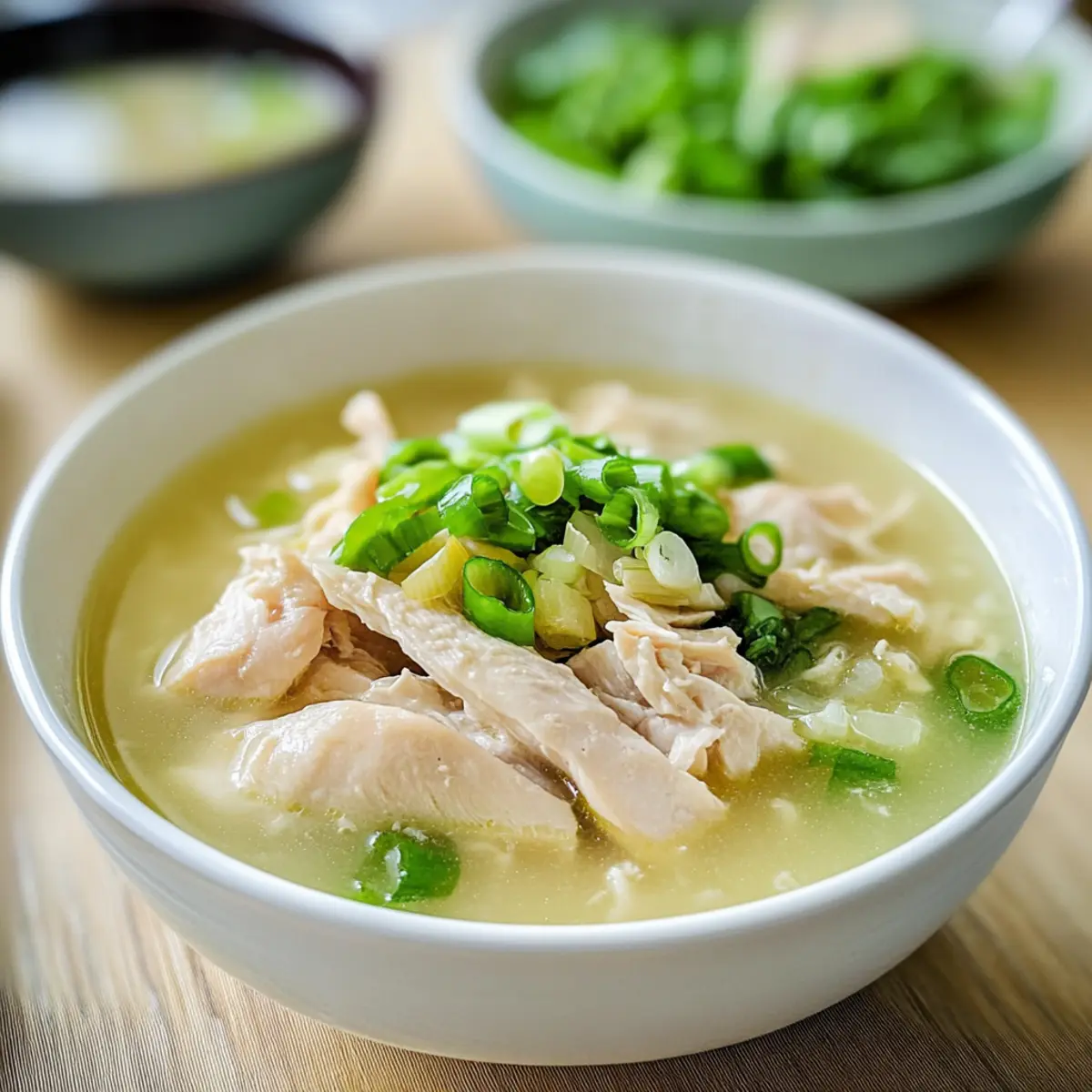
- Perfect Garnish: Fresh chopped scallions on top add color and brightness to your Dakgomtang, enhancing the overall presentation.
Dakgomtang (Korean Chicken Soup) Recipe FAQs
What chicken should I use for the best flavor in Dakgomtang?
Absolutely! I highly recommend using a whole chicken (3 to 4 pounds) as it provides the richest flavor. The bone-in parts are ideal for creating a deep, comforting broth. If you’re in a hurry, bone-in thighs or legs can be great alternatives for quicker cooking.
How long can I store leftover Dakgomtang in the refrigerator?
Store leftover Dakgomtang in an airtight container for up to 3 days. This time allows the flavors to meld beautifully, so when you reheat it, you’ll enjoy a deliciously rich soup!
Can I freeze Dakgomtang?
Yes! To freeze, let the Dakgomtang cool completely before transferring it into airtight containers or freezer bags. Make sure to remove excess air. It will keep well in the freezer for up to 3 months. Just remember to label your containers with the date!
How do I reheat frozen Dakgomtang?
To reheat, thaw your frozen Dakgomtang overnight in the refrigerator. Once thawed, pour it into a pot and warm it over medium heat, stirring occasionally. If the soup has thickened, add a splash of water or chicken broth to restore its creamy consistency.
What if my broth doesn’t taste rich enough?
Very! If you find your broth lacking flavor, let’s enhance it! After shredding the chicken, return the bones to the pot and simmer the broth for an additional 30-60 minutes covered. This step will deepen the flavor profile, making your Dakgomtang even more comforting.
Are there any ingredient substitutions for dietary considerations?
Certainly! If you have dietary restrictions, you can use gluten-free soy sauce to make your Dakgomtang gluten-free. Also, feel free to customize with your favorite vegetables like napa cabbage or Korean radish to suit your palate or nutritional needs. Enjoy experimenting!

Comforting Dakgomtang: Your Go-To Korean Chicken Soup Recipe
Ingredients
Equipment
Method
- Prepare the Chicken: Place a cleaned whole chicken (3 to 4 pounds) in a large stock pot. Cover with about 10 cups of water. Bring to a rolling boil.
- Add Aromatics: Once boiling, add garlic, ginger, onion, and scallions. Skim foam from the surface and reduce heat to medium-high.
- Simmer the Soup: Allow to simmer for 40-50 minutes, covered. Check chicken doneness by ensuring juices run clear when pierced.
- Shred the Chicken: Remove chicken and let cool. Shred into bite-sized pieces, discarding skin and bones if desired.
- Enhance the Broth: Return bones to the pot and simmer for an additional 30-60 minutes for richer broth.
- Strain and Serve: Strain the broth into a bowl and skim excess fat. Serve with shredded chicken and garnish with scallions.
Leave a Reply